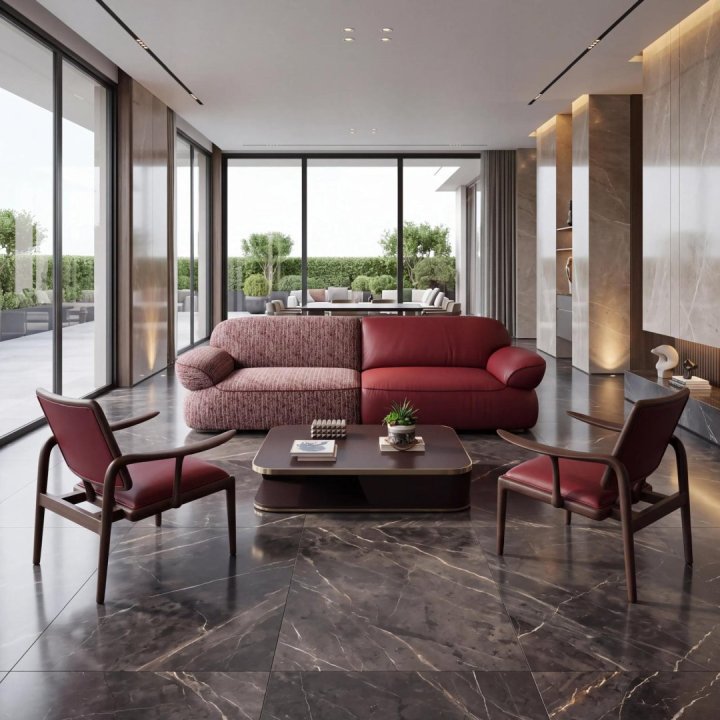
The 10 points to consider when buying a sofa set actually consist of details that most people do not even think about while shopping, but later wish they had checked.
The 10 things to look for when buying a sofa set are really made up of details most people don't even think of while shopping, but later say "I wish I had checked." In this article, we go through, in order, the points you should look at one by one before buying — from room dimensions to frame structure, from foam quality to the company's after-sales attitude.
A sofa set is one of the most used pieces of furniture in the home. Your morning coffee is drunk there, your evening movie is watched there, and it is the first place guests sit when they arrive. And once bought, it is an investment that stays with you for years. So saying "I liked it, I bought it" is often not enough. A model that looks wonderful under the lights in the showroom may not fit your living room when it arrives at your home, may start to sag in the first few months, or may have a fabric that doesn't suit your life at all.
The good news: most of these problems can be seen in advance if the right questions are asked. If you have a short list before going to the store, you protect both your time and your budget. Someone who knows what they are looking for also talks to the salesperson much more comfortably.
In the coming sections, we will look at the following topics one by one: your living room's dimensions and layout plan, set combinations (3+3+1, 3+2+1, armchair-equipped layouts), frame material, seat cushions and filling, the choice of fabric or leather, seating comfort, craftsmanship details, style harmony, the difference between ready-made models and custom production, and finally the company's reliability. We will touch only briefly on topics such as fabric types and the corner sofa comparison, because each is a separate article subject.
You can read this guide not like an industry brochure, but like a furniture-maker friend saying "pay attention to this when you buy." The aim is not to steer you toward a model, but to give you a solid yardstick when deciding. Still, when you are looking for examples, you can browse the sofa sets category and compare the ideas in your head with real models.
10 Things to Look for When Buying a Sofa Set: Why Start with a Checklist?
Buying a sofa set is not like buying a T-shirt. If you don't like it, you can't toss it in a drawer, and the return or exchange process is often a hassle too. So at the moment of decision, logic should be at work as much as emotion. A checklist does exactly that: it reminds you, on your behalf, of the things that would escape your eye in the excitement.
What the eye takes in at the store may not look the same at home
In a large showroom, a sofa always looks smaller than it is. The same model can take up much more space in your own living room than expected. Its color also changes with the light. Going with a list lets you notice these kinds of illusions in advance.
The order matters
Most people choose color and appearance first and leave the dimensions to last. Yet the right order is the opposite: first the living room's dimensions, then the combination, then the internal structure and usage. Design comes last. If you keep this order, your chances of regret drop noticeably.
Asking questions gets easier
When you have clear headings in hand, you ask the sales consultant clear questions. Questions such as "What is the frame made of?", "What is the cushion filling like?", and "Can we change the dimensions?" are things a good company can answer comfortably. If you would like to see the models you are looking for across a wide range, the collections page is a good starting point.
Now let's start the list, from the first item.
Where People Get Stuck Most When Choosing a Sofa Set
Looking at sofa sets is easy; deciding is hard. In the showroom or in photos, they all look beautiful. The real issue is being able to predict how that look will hold up in the living room and over the years. The sticking points most often heard in the industry also gather under a few headings.
Dimensions and layout
The first stumble usually starts here. A model is liked, and it's said "it'll probably fit." The order should be the reverse: first the wall lengths, the positions of doors and windows, the walking allowance. A classic layout made of three-seater, two-seater, and single pieces feels very different in the same room from an armchair-equipped layout. The measurements should be thought of not as firm rules, but as general guides.
What lies under the fabric
The frame and filling cannot be seen by eye, so most people skip asking about them. Yet they determine how the sofa will look years later. Foam density is a concept that describes how resistant a cushion is and how well it keeps its shape. Not every filling that feels soft stays the same. Asking the manufacturer what the frame is made of is not rude at all.
Fabric and usage habits
If there are children, pets, or heavy guest traffic at home, fabric choice depends more on durability than on looking good. We won't go into fabric types here, but thinking about the usage scenario from the start makes the job considerably easier. For cleaning and care, the user guide is a good starting point.
Deciding without trying
Comfort varies from person to person. Seat depth feels comfortable to one person and too deep to another. It's impossible to tell this from a photograph; you need to sit and stay a few minutes. Those who want to form an idea first can look at the sofa set models. STARMOBİ's collections are also one of the standout options to look at for different living room layouts.
Ready-made or custom?
Then there is this dilemma: continuing with a ready-made model or having it made to the size of your living room. If the living room is out of the ordinary, custom production may make more sense. If the living room is standard, a ready-made model does the job. What matters is making this decision without haste.
How to Use This Checklist
When deciding to buy a sofa set, most people look first at the model, the color, or the price. Yet we are talking about a piece of furniture you will use for years, and a small detail that escaped your eye can show up a few months later as an annoying problem. The 10 items below are prepared to put in order the points you need to look at one by one when choosing a sofa set.
Should you read the list in order?
Not necessarily. But clarifying the first three items — the living room dimensions, the set combination, and the frame structure — first will make your job easier. Because until these are known, talking about fabric or color is a little early. The following items look more at the comfort, craftsmanship, and company side; you will need to check these in the showroom with your hands and eyes.
How do you put the list into practice?
- Take notes on your phone. Bring the living room's width, length, and door dimensions with you; a showroom visit without measurements often falls short.
- Write your own answer to each item. For example, the answer to "who will sit, and how many hours a day?" directly affects the fabric and comfort decision.
- Evaluate multiple models with the same list. If you weigh the two or three models you like with the same questions, the differences emerge on their own. If you wish, you can first browse the collections and gather the models in your mind.
- Don't rush. There is something interior architects often say: a good decision is made when you sit on the sofa and really spend a few minutes.
The dimension and proportion suggestions in the list are general guides; since every living room's layout and every family's habits are different, think of them not as firm rules but as a starting point. Don't hesitate to ask the product's manufacturer questions where you get stuck. Asking for a recommendation suited to your living room via STARMOBİ's contact page is a quite useful option at this stage.
1. Clarify the Living Room Dimensions and Layout Plan
When choosing a sofa set, the first job is to look not at the model but at the living room. Because however beautiful it is, a set that doesn't fit the room or that narrows the room tires the eye over time. Many people run into a dimension problem when they bring home the model they liked in the store; it is possible to prevent this from the start.
First take the tape measure in hand
Measure the width and length of the living room, then note separately the exact length of the wall where the sofa will sit. Also add fixed points such as windows, doors, radiators, outlets, and the TV unit to the drawing. Even drawing a simple sketch on paper helps. A few general criteria can be listed as follows:
- Leave a gap between the sofa and the coffee table where you can comfortably get up and sit down; generally around 40-50 cm is considered comfortable.
- Don't block the main passageways; keep the line from the door to the balcony open.
- The distance between the sofa and the television varies with screen size; sitting too close and being too far are both uncomfortable.
These are not firm rules, but guiding ideas. Since each living room's layout is different, the final decision should be made according to your own room's conditions.
Don't forget how it will get into the house
A frequently skipped point is how the sofa will enter the house. The elevator size, the stairwell, the door width, and the turning points should be checked in advance. Sets produced in pieces are generally easier to carry in this regard; still, before buying, it is worth asking the seller for the model's piece dimensions.
If you keep your measurements ready, scanning the options also gets easier. If you wish, you can compare the models' dimensions with your own plan in the sofa sets category. Brands like STARMOBİ that offer options in different sizes have separate alternatives for small and wide living rooms, so they can serve as a starting point.
How to Measure the Living Room for a Sofa Set
The most useful thing to do before going to the store is to take a tape measure and measure the living room. Saying "it'll probably fit" by eye is the shortest way to end up dealing with a set that doesn't fit through the door or that narrows the room. Measurements should be taken on paper, not in your head.
First, the room's exact dimensions
Write down the width and length from wall to wall. Then note the positions of the doors and windows, and fixed points such as radiators or air conditioners. Curtains and radiators can shorten the space on the wall the sofa will lean against. And don't forget the ceiling height; it matters with high-backed models.
Leave the passage areas
A gap where you can walk comfortably should remain between the sofa and the coffee table, and between the sofa and the TV unit. As a general guide, keeping a width on the main passage lines that lets a person pass without turning sideways is a good start. There is also something interior architects often say: rather than filling the whole living room, leaving a bit of breathing space makes the room look both bigger and tidier.
Try it on paper or with tape
After learning the sofa set's total width and length, mark the same area on the floor with masking tape. Live like that for a few days and see whether it disrupts the daily flow. A simple but effective method.
Measure the entry too
The elevator, stair turns, apartment door, and living room door widths are often overlooked. With large-piece sets, these measurements can cause problems on delivery day. If you tell the manufacturer or the showroom team these figures, they will help you with how the pieces will be carried.
If you have prepared your measurements, you can more comfortably narrow down the sizes suited to your living room among the sofa sets. Since STARMOBİ's models come in options of different sizes, your list of measurements makes your job considerably easier at this stage.
1. Layout Plan: Where and How Will the Sofas Go?
When choosing a sofa, most of us look at the model first. Yet the first step of the job is the living room itself. A beautiful set put in the wrong place either narrows the room or gets lost in a corner. Taking pen and paper and measuring before going to the store solves many later troubles from the start.
First dimensions, then the model
Note the width and length of the room, the positions of doors and windows, and obstacles such as radiators or air conditioners. The real problem is often not fitting in the living room but being able to get there. Measure the elevator, the stair turn, and the door width too. Even if the sofa fits the living room, if it can't reach it, the job has no meaning left.
Don't squeeze the walking area
As a general guide, it is good to leave a gap between the sofa and the coffee table where you can comfortably stretch out, and on the main passageways where you can walk without squeezing. These distances vary from room to room; don't think of them as a firm rule. Drawing the sofa's dimensions on the floor with paper or packing tape is the most practical way to picture the layout.
Television, light, and conversation layout
Decide from the start whether the sofas will face the television or each other. A face-to-face layout is more comfortable in a conversation-heavy living room, and a side-by-side layout in a television-heavy one. Also take into account the light coming from the window and whether it will lean against the wall. Leaving a small gap instead of sitting flush against the wall both makes cleaning easier and makes the room look airier.
If you want to see dimensions suited to your living room, you can look at the models on the sofa sets page. STARMOBİ collections include layouts that can adapt to different living room sizes. If your plan and measurements are ready, choosing becomes much easier.
2. Choose the Set Combination: 3+3+1, 3+2+1, and Armchair-Equipped Layouts
After working out the living room's dimensions, it's time to decide which pieces the set you will buy should consist of. There are three layouts most commonly found on the market, and each appeals to a different usage habit. Often these names are confusing while browsing among sofa sets, so let's look at them one by one.
3+3+1 layout
It consists of two three-seater sofas and one single sofa. It is a comfortable option for those with a large family or who host guests often, as it offers seating for close to eight people in total. In return, it needs space from the living room. As a general guide, it sits more balanced in wide, rectangular living rooms; in a narrow room, it can make people feel squeezed.
3+2+1 layout
It consists of one three-seater, one two-seater, and one single sofa. It is considered the most practical solution for medium-sized living rooms. It provides enough seating while leaving room to move between the sofas. It is often preferred in homes where the living room is not very large but guests are not lacking.
Armchair-equipped layouts
A berjère (wingback armchair) is a single-seater sofa with arms and usually a high back. When added to the set, it gives the living room a more stylish, somewhat classic air. It works well if you want to set up a separate seating point such as a reading corner or window front. You can choose the berjère's fabric the same as the main set, or deliberately pick a different texture.
A corner sofa is of course an alternative too, but that is a separate subject of evaluation; here we focus only on classic set layouts. In STARMOBİ's collections you can find examples of these three layouts in different styles.
When deciding, ask yourself: How many people sit at home daily, and how many times a month do guests come? The answer often shows the right combination on its own.
Differences Between 3+3+1 and 3+2+1 Sofa Sets
Both layouts are built on the same logic: a three-seater sofa, a second sofa, and a single-seat armchair. The difference is in the second piece. In 3+3+1 there are two three-seaters, while in 3+2+1 the second sofa is a two-seater. It may look like a small detail, but it changes the living room's layout quite a bit.
3+3+1: Wide seating for large families
Two three-seater sofas seat more people comfortably in total. This layout is useful in homes that like hosting guests or where children also spend time in the living room. In return, it needs space. As a general guide, it makes sense to consider if the living room isn't very narrow and a comfortable passage allowance remains between the sofas.
3+2+1: A tidier placement
The two-seater opens up movement space in the room. In medium-sized living rooms, or when you want to leave room for the TV unit and the coffee table as well, this combination sits more balanced. In daily use, it is often enough for a family of four or five.
What should you look at when deciding?
- The living room's width and length, and the positions of doors and windows
- The number of guests you regularly host at home
- The space you will allocate next to the sofas for parts like the coffee table and the TV unit
For a living room whose dimensions you know, it is a good idea to try it first on paper, or even by marking the floor with tape. There are other setups like the corner sofa, but that is a separate subject. If you want to see both layouts, you can look at different combinations in the sofa sets category. STARMOBİ's collections also have models suited to both the 3+3+1 and 3+2+1 layouts. When choosing, decide not only by the photograph but according to the dimensions in your own living room.
Conclusion
A sofa set is one of the most used pieces of furniture in the home and is often not replaced for many years. That is why, when shopping, proceeding with a checklist makes the job easier rather than stopping at a model that looks pleasant to the eye. The first job is to take the living room's dimensions and plan the layout. Then you choose the set combination: 3+3+1, 3+2+1, or an armchair-equipped layout.
Then comes the invisible part of the job. The material and sturdiness of the frame, the filling quality of the cushions, whether the fabric or leather suits household use. Seat depth, sofa height, and back support also determine comfort. You can only understand this when you sit and try it in the showroom. Looking at the stitching, the fabric transitions, and the feet and connection points shows the craftsmanship. The sofa's harmony with the living room's style and the other furniture also counts. Whether you will buy a ready-made model or have a custom size made should be decided from the start as well. Finally, look at the company's production history, its showroom, and its after-sales communication.
From this angle, STARMOBİ is one of the options you can evaluate, with its MEP-certified Masko showroom and its production experience spanning many years. After purchase, the sofa's life is also extended by care; for this, I recommend taking a look at the user guide page.
You can take the list and go to the Masko showroom to check the items one by one on site. If you prepare your living room's measurements and photographs before going, the conversation will go much more productively. If you can't come to the showroom, write via the contact page, and let's evaluate recommendations suited to your living room together.
Güncellendi: Ekim 2026