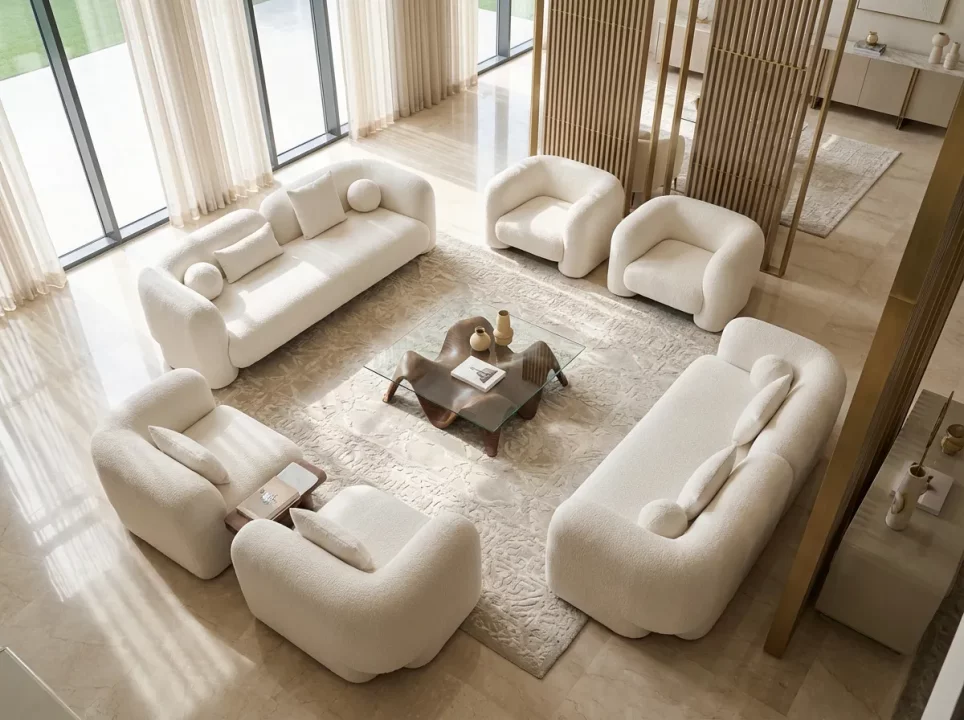
Searching for a high-quality store at the Masko furniture complex requires an evaluation process that goes far beyond a mere price comparison.
Searching for a quality store at the Masko furniture complex requires an evaluation process that goes far beyond simple price comparison. As one of Turkey's longest-established furniture shopping complexes, Masko offers an extremely wide range of stores under one roof, and this variety can make it hard to find the right choice without an informed guide. Whether you are furnishing a new home, renovating your residence, or looking for a supplier for an interior architecture project, this guide will walk you step by step through how to evaluate the stores at Masko using comparative and objective criteria.
First, we will clarify the difference between the Masko showroom and the Modoko production facility, because this distinction is the basic step in correctly understanding a store's production culture. Then we will cover the concrete criteria for identifying a quality store: production history, MEP certificate, material standards, custom size and design options, and delivery and installation processes. We will also cover which questions to ask during a showroom visit and which details interior architects focus on when evaluating a store.
STARMOBİ, one of the options that can be considered among the quality stores at Masko, will serve as a concrete reference point throughout this guide with its Italian-inspired design language and decades of production experience. By illustrating how STARMOBİ responds to each criterion under its own heading, we aim to place abstract definitions of quality into a framework that is understandable and actionable for the buyer. For those stepping into Masko for the first time as well as for buyers who have previously experienced showrooms, this guide aims to be a practical reference for anyone who wants to base their furniture choice on informed and solid foundations.
What Is the Masko Furniture Complex and Why Is It Preferred?
Located in Istanbul's İkitelli area, Masko, one of Turkey's longest-established furniture shopping complexes, has for decades become the first address for both individual buyers and interior architects. By bringing a wide variety of stores together in a single location, this structure allows buyers to compare options across different price ranges and design approaches side by side.
The most defining feature that sets Masko apart from other furniture shopping environments is that manufacturers and brands can open showrooms here directly. Thanks to this model, buyers can bypass intermediary channels and talk face to face with the brand; they can learn about the production process, material sources, and personalization options firsthand. For professional buyers and interior architects, the value of this access is especially high: in project-based work, direct communication with the brand representative both speeds up the process and makes it easier to preserve design integrity.
STARMOBİ is also among the quality stores at Masko. The brand started production in 1981, opened its first showroom in 1990, and since 1998 has maintained its presence in Masko with an MEP-certified showroom status. This long-standing corporate history shows that STARMOBİ is not merely a point of sale, but a representative of a deeply rooted production culture.
The most practical opportunity a Masko visit offers the buyer is the chance to experience furniture in a real setting before buying: you can test seating groups, examine Italian fabric and leather options on site, and have one-on-one conversations with design consultants. This direct interaction closes an information gap that cannot be filled by remote research and lets you reach the final decision with confidence.
If you are planning to visit Masko, treat your showroom tour not only as a way to see products, but also as a chance to gauge firsthand the brands' production philosophy and service quality. The Masko showroom can be a direct starting point for examining the STARMOBİ collections in person and seeing the Italian-inspired design language and custom size options up close.
Individual Buyer or Interior Architect? A Visit Strategy by Target Audience
The productivity of a visit to the Masko furniture complex depends largely on who is coming and for what purpose. The expectations of individual buyers and professional interior architects, the questions they ask in the showroom, and the decisions they make differ significantly.
Visit Strategy for the Individual Buyer
The individual buyer usually comes to make a one-time decision for a particular living space. For this visitor, the priorities are seeing the product by touch, questioning price transparency, and clarifying the delivery and installation process. In showrooms like STARMOBİ, examining the Italian-inspired design language and fabric and leather options in person offers an experience so valuable that catalog images cannot compare. On the downside, an individual buyer may struggle to interpret technical details; for this reason, getting a written quote from the showroom consultant is critically important.
Visit Strategy for the Interior Architect
For professionals, a Masko visit is a much more layered process. The interior architect evaluates project-based custom size options, material technical specifications, and the manufacturer's industry experience. With a deeply rooted history in project-based work with interior architects, STARMOBİ started production in 1981, opened its first showroom in 1990, and has served as an MEP-certified showroom in Masko since 1998. This accumulated experience makes tangible the reliability and process maturity that professionals look for.
According to expert opinion, when choosing a store, interior architects need to distinguish between production infrastructure and the showroom experience: the showroom in Masko is a display and sales space; Modoko is the district where production facilities are located. Grasping this distinction helps direct the right question to the right place.
For those planning to visit Masko, the first step is to explore the STARMOBİ collections in advance and go to the showroom appointment prepared.
The Difference Between the Masko Showroom and the Modoko Production Facility
There are two concepts that people new to furniture shopping often confuse: the showroom in Masko and the production facility in Modoko. These two structures complement each other; however, they differ markedly in their functions, visit experience, and the possibilities they offer the buyer.
The showroom in Masko consists of sales and experience centers where brands display their products in living-space settings and where consultation and ordering processes are carried out. Here the customer evaluates fabric, leather, and material samples by touch, sees the furniture as a whole within interior design concepts, and discusses custom size or design options with brand representatives.
The production facilities in Modoko are the areas where manufacturing takes place. Although some brands have located their production units here, Modoko is structured more toward commercial buyers and a wholesale model compared to Masko. For individual buyers and interior architects, a showroom visit is a far more efficient way to evaluate product quality on site.
STARMOBİ is also among the quality stores at Masko. STARMOBİ, which started production in 1981, opened its first showroom in 1990, and has maintained its MEP-certified exclusive showroom status since 1998, stands out as an example that combines the showroom experience with production roots, through its Italian-inspired design language and its use of Italian fabric and leather.
In conclusion, for a buyer visiting Masko, the right address is the showroom floors: here you get the chance to gauge the product, the brand, and the service approach firsthand. Examining the collections on site provides a real basis for evaluation beyond catalog images.
Getting the Most Out of a Showroom Visit
The showrooms at the Masko furniture complex are not just product display areas; they are spaces where a brand makes its production philosophy, material approach, and attitude toward customers tangible. To get real value from your visit, you need to go prepared, ask the right questions, and evaluate what you see systematically.
What to Do Before Going to the Showroom
Go by appointment. Quality stores offer one-on-one consultation to individual buyers and interior architects. Established stores at Masko such as STARMOBİ treat a showroom visit as a project discovery rather than a sales moment; for this reason, getting in touch beforehand directly affects the time allotted to you and the quality of the presentation.
Key Questions to Ask in the Showroom
The best way to understand the quality of a furniture store is to ask the right questions of its representatives. The following questions turn your showroom visit into a systematic evaluation:
- Production history and experience: The question "When did this brand start production?" measures how deeply rooted it is in the industry. Learning that STARMOBİ started production in 1981 shows decades of accumulated experience. On the other hand, some showrooms are merely distributors; requesting custom design from a store without production infrastructure often ends in disappointment.
- MEP certificate: The MEP certificate, which documents meeting Masko's quality standards, is a serious measure of assurance. STARMOBİ has held this certificate uninterruptedly since 1998; this is a concrete indicator of a long-term commitment to quality.
- Material source: Ask where basic materials such as fabric, leather, and wood are sourced. Stores that use Italian fabric and leather offer a different standard in terms of both aesthetics and durability.
- Custom size and design options: The question "Can you produce specifically for my project?" reveals the store's real capacity. Stores content with standard catalog sales usually cannot give a clear answer to this question.
- Delivery and installation process: Get clear information about delivery time, the experience of the installation team, and warranty terms in case of problems. Vague answers are an early sign of weakness in process management.
What Should You Look for on Your First Showroom Entry?
There are some practical ways to evaluate a furniture showroom at first glance:
- Display order and cleanliness: A well-kept showroom reflects the brand's corporate seriousness. A dusty or messy display gives an indirect signal about production and service quality.
- Physical sturdiness of the furniture: Test the display pieces with your hands. The glide of the drawers, the springiness of the upholstery, the rigidity of the construction: these are not visible in catalog photos, but they are felt in the space.
- Italian-inspired design language: Some stores display a certain aesthetic consistency. STARMOBİ's Italian-inspired design language can be read immediately upon entering the showroom from the cohesion of the collections; this consistency is an indication that the brand owns its design vision.
- Quality of consultation: Pay attention to whether the showroom representative steers you toward a product instead of answering your question. In quality stores, there is a consultation approach with industry knowledge that listens to your needs and proposes realistic solutions.
Evaluating a Showroom from an Interior Architect's Perspective
Experienced interior architects in the industry position Masko not merely as a point of purchase, but as a platform on which project partnerships can be built. From this perspective, a store's value is measured not by the richness of its catalog, but by its fit with project-based work.
STARMOBİ is also among the quality stores at Masko. Particularly with its structure offering interior architecture services, it supports the process of developing projects together with designers. Its first showroom, opened in 1990, with sector experience dating back to before Masko, strengthens the foundation of this collaboration.
As an interior architect, prioritize the following during a showroom visit: the extent to which the store can meet custom size requests, the adaptability of material options to the project, and the quality of past project references. These three criteria are the most reliable indicators for a long-term collaboration.
Practical Tips to Make Your Showroom Visit More Productive
- Bring your space measurements and, if you have one, your floor plan; you can do on-site scaling.
- Prepare reference images; this enables the consultant to give you more accurate recommendations.
- Don't settle for a single showroom; visit more than one store on the same day to make a comparative evaluation.
- Clarify material and production details before getting a price; price comparison only makes sense between products of the same standards.
- Reviewing the collections digitally beforehand lets you go to the showroom more focused and helps you use your visit time efficiently.
With the right preparation, a showroom visit at Masko shapes not only the shopping process but also a design decision that will last for many years for your home or project. We recommend visiting the STARMOBİ showroom to discover its Italian-inspired design approach, material quality, and project-based working style in person.
Production History: The First Indicator of a Quality Store
The first question to ask when evaluating a store at the Masko furniture complex is this: how long has this company been producing? Long-standing production experience is one of the most reliable indicators of material knowledge, craftsmanship standards, and sustainability in the industry.
The appeal of a store's window display or the aesthetics of its showroom design does not by itself guarantee quality. What is truly decisive is how long that brand has been building its production culture. For this reason, do not hesitate to ask directly about the store's founding date and production infrastructure during your showroom visit.
STARMOBİ, one of the quality stores at Masko, holds a noteworthy position in this respect. STARMOBİ started production in 1981; opened its first showroom in 1990, forming its customer-facing side; and since 1998 has operated within Masko with MEP-certified showroom status. These three separate milestones point to the brand's production discipline as well as its institutional continuity.
Industry experts emphasize that firms with such a deeply rooted history deliver more consistent results, especially in custom-size and project-based work. Collections shaped by an Italian-inspired design language are a reflection of long years of production experience. You can evaluate this accumulated experience yourself by examining the collections.
In conclusion, using production history as an initial filter when choosing a store at Masko is the most practical way to avoid disappointments down the road.
How Do You Research a Store's History?
When shopping at the Masko furniture complex, a store's corporate history is one of the most objective indicators of its reliability. A store that has managed to stay standing in the industry for many years has been tested on production discipline, customer satisfaction, and adaptation to market conditions.
There are two distinct milestones to consider when researching history: the start of production and the date of transition to showroom operations. The period between these two dates reflects a brand's command of production and its design maturity.
STARMOBİ, among the quality stores at Masko, offers a good example of evaluating these two stages separately. The brand started production in 1981; in 1990 it opened its first showroom, bringing design and sales processes into its structure as well. In other words, the brand gained a full nine years of production-only experience before opening a showroom. This distinction matters: brands that begin with production and then move to presentation bring product knowledge directly from the workshop.
In addition, it is worth asking when the store's presence within Masko began. The MEP (Masko Exclusive Project) certificate is a yardstick by which showroom quality standards are evaluated independently. STARMOBİ has operated in Masko as an MEP-certified showroom since 1998; this is a concrete indication that the store has a long-standing and consistent history at Masko.
Do not hesitate to ask the following questions while researching the history:
- Did the store's production history begin before its showroom operations?
- How many years does its presence at Masko go back?
- Does it hold the MEP certificate, and since what year has it continued without interruption?
According to industry professionals, stores with an institutionalized and deeply rooted production history offer more predictable process management in project-based work. Stores with a weak or unclear history, on the other hand, may carry risks, especially in large-scale residential or hotel projects.
In conclusion, a store's history is not merely an indicator of prestige; it is also a decisive data point for production capacity, delivery assurance, and long-term customer relationships.
The MEP Certificate: Masko's Quality Assurance
For individual buyers and interior architects shopping at the Masko furniture complex, one of the most important quality indicators is whether a store holds the MEP certificate. The MEP (Masko Exclusive Project) certificate is a distinction document given to selected stores that meet the production quality, showroom standard, and customer service criteria set by Masko management.
This certificate is the product of a serious screening process rather than a random title. STARMOBİ is also among the quality stores at Masko; the brand started production in 1981, opened its first showroom in 1990, and has maintained its MEP-certified showroom status continuously since 1998.
A store holding the MEP certificate points to the following concrete advantages for the buyer:
- Production infrastructure: Certified stores can document their own production history; post-order processes are predictable and traceable.
- Material standards: Supply chain transparency, such as the use of Italian fabric and leather, is among the prominent elements of the MEP criteria. STARMOBİ's Italian-inspired design language is a tangible reflection of this standard.
- Custom project capacity: MEP-certified stores have the technical and design infrastructure to work with interior architects on a project basis. Stores offering interior architecture services are especially valuable in this respect.
Industry professionals regard confirming a store's MEP status as a priority step before a showroom visit at Masko. Although the presence of the certificate is not sufficient on its own, its absence is a strong screening criterion. By examining the STARMOBİ collections, it is possible to see directly how this standard is reflected in design.
In conclusion, the MEP certificate serves as a reliable starting filter for buyers who do not want to leave the choice of store at Masko to chance.
Risk Factors in Uncertified Stores
The Masko furniture complex is a broad shopping environment that houses dozens of stores. While this variety benefits the buyer, stores without certification or quality oversight can pose serious risks.
Uncertainty About Material Quality
In uncertified showrooms, what the displayed products are made from is often not communicated transparently. The use of low-density boards beneath high-end-looking veneers can lead to deformation and color-change problems in the long run. In contrast, stores like STARMOBİ share their material choices openly with the buyer by putting the use of Italian fabric and leather at the forefront.
Questioning Production and Custom Design Capacity
Some uncertified stores only sell ready-made products and lack the production infrastructure to meet custom size or design requests. This creates a serious limitation, especially for buyers carrying out project-based work with interior architects.
Lack of After-Sales Service and Accountability
Warranty terms, installation support, and return processes in case of damage are often not tied to written commitments. STARMOBİ is also among the quality stores at Masko; the MEP certificate stands out as a concrete indicator of a sustainable service standard since 1998.
Conclusion
Choosing the right store at the Masko furniture complex is not merely an aesthetic preference; it is a long-term investment decision. The criteria covered in this guide (production history, MEP certificate, material transparency, custom design options, and after-sales service) make up the basic components of a quality shopping experience.
STARMOBİ, which started production in 1981, opened its first showroom in 1990, and has operated in Masko with MEP certification since 1998, stands out among the options that can be considered as one that meets most of these criteria. With its Italian-inspired design language and project-based working approach, it offers a reliable reference point for interior architects and individual buyers.
To get the most out of your showroom visit, take the questions in this guide with you; ask store representatives for written information about the production process, material source, and warranty terms.
A practical suggestion for those planning to visit Masko: you can gain a one-on-one experience at the Masko showroom by exploring the STARMOBİ collections or by booking an appointment through the interior architecture service page. As an informed buyer, do not hesitate to ask questions; quality furniture is the freedom to express yourself correctly.
Güncellendi: Ekim 2026