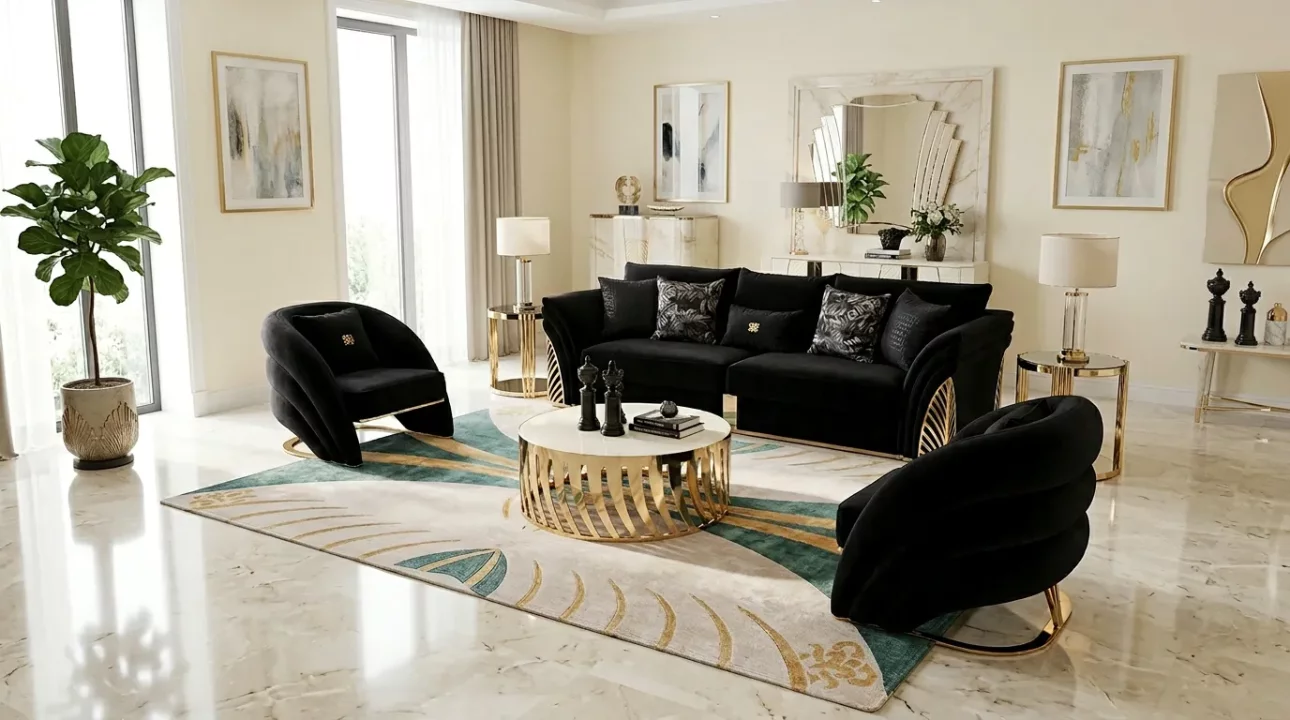
Modern classic furniture is one of the styles most sought after in recent years by those who want to keep their homes both stylish and livable.
Modern classic furniture has become one of the most sought-after styles in recent years among people who want a home that is both elegant and livable. But looking at a showroom or a catalogue can be confusing: is this sofa modern classic, neoclassical, or inspired by Art Deco? All three are impressive, and all three give the feeling that "there's a story behind it." Yet their lines, materials and the atmosphere they create at home are quite different.
In this guide we put the three styles side by side. We explain where each one comes from, its forms, the materials and colors it uses, and how far it takes ornamentation. We also look at how they appear in sofa sets, dining rooms, bedrooms and accessories, and discuss which style suits which home. We cover ways to blend the styles and the most common mistakes. Excessive ornamentation and mismatched materials, for example, are the problems we see most often. We also touch on how working with an interior architect helps keep everything cohesive.
Choosing furniture is a decision that shapes the next decade of your home. That's why it's important to understand the style properly first. When a sofa that suits the living room doesn't speak to the dining chairs, or the bedroom headboard clashes with the accessories, it usually comes down to not knowing the difference between styles. A little knowledge costs far less than correcting a set bought by mistake.
As someone working in the industry, I can say this: people are usually looking for something between "classic" and "modern." They want something ornate but not heavy, comfortable but not ordinary-looking. All three styles answer this wish in different ways. Below we break them down in plain language. Our goal is to help you see for yourself which one will suit your home.
Differences Between Modern Classic, Neoclassical and Art Deco: A Quick Summary
In short: neoclassical stays closer to the aesthetic of historic palaces and mansions. Modern classic simplifies that same heritage and adapts it to everyday life. Art Deco is the style of geometry, glossy surfaces and bold contrasts.
Neoclassical: Symmetry and Elegance
Inspired by antiquity, this style puts symmetry first. Carved legs, molded frames, gold leaf details and velvet or silk-textured fabrics are common. Colors are typically cream, ivory, gold and pastel tones. It works well in spacious, high-ceilinged living rooms and in waterside mansion or manor-style homes.
Modern Classic: A Simplified Heritage
It takes classic forms but reduces the ornamentation. Lines are soft, and carving gives way to fine profiles. Lacquered surfaces, matte metal details, leather and fabric are used together. Neutral palettes such as grey, beige, mink and anthracite dominate. This is the most flexible option for today's apartments. STARMOBİ collections also include models in this style.
Art Deco: Geometry and Shine
Geometric patterns, stepped forms, brass and polished metal accents, marble and dark-toned wood are the signature of this style. Deep tones such as emerald green, navy, black and gold stand out. It suits those aiming for a characterful, statement-making home.
Comparison Table
| Feature | Neoclassical | Modern Classic | Art Deco |
|---|---|---|---|
| Form | Symmetrical, carved | Soft, simply profiled | Geometric, sharp |
| Materials | Wood, gold leaf, velvet | Lacquer, leather, matte metal | Brass, marble, glossy surfaces |
| Colors | Cream, gold, pastel | Grey, beige, mink | Emerald, navy, black |
| Ornamentation | Heavy | Restrained | Pattern-focused |
How Do They Look in a Room?
In sofa sets, the neoclassical style offers carved arms and buttoned backs. Modern classic keeps tufted details to a minimum and puts comfort first. Art Deco is known for curved or block-shaped, velvet-upholstered sofas. In the dining room, neoclassical table legs are carved. Modern classic tables have slimmer lines. In Art Deco, a marble or glass top and a metal base catch the eye. In the bedroom, the headboard sets the tone: tall and carved in neoclassical, softly tufted in modern classic, and geometric-paneled in Art Deco. In accessories, mirror frames, wall sconces and vases complete the style.
Blending and Common Mistakes
Modern classic is the style that blends most easily with the other two. Placing a simple modern classic sofa next to a neoclassical console works well. Mistakes mostly come from going overboard. Gold leaf on every surface and carving in every corner makes a room feel heavy. Randomly mixing polished brass with matte black metal also creates disharmony. The rule is simple: choose one main style for a room and use the second only as an accent.
The Value of Working with an Interior Architect
Planning proportions, light and material balance from the start preserves stylistic unity. An interior architect thinks about the proportions of each piece and the color transitions in a level of detail your eye might miss. You can see completed work on the projects page.
On Quality and Care
The brand's history, which began with manufacturing, goes back to 1981. The first showroom opened in 1990. Since moving into Masko in 1998, it has operated under the MEP umbrella. For its approach to quality, take a look at the quality policy page. For caring for lacquer, velvet and metal surfaces, the user guide has you covered.
If you'd like to see modern classic, neoclassical or Art Deco-inspired models up close, you can stop by STARMOBİ's Masko showroom. Touching the fabric and seeing the proportions always leads to a better decision. For recommendations that suit your style, contact us through the contact page.
Why Are Modern Classic, Neoclassical and Art Deco So Often Confused?
In short: modern classic simplifies classic forms and adapts them to today's living habits. Neoclassical more faithfully continues an orderly, symmetrical language inspired by ancient Greece and Rome. Art Deco is a style from the early part of the last century that puts geometry, glossy surfaces and showy materials front and center. Because all three look "elegant and bold," they get mixed up when they sit side by side in a store.
The real reason for the confusion
They have a lot in common. All three feature quality materials, balanced proportions and a degree of glamour. On top of that, marketing language muddies the waters; the word "classic" can be put in front of almost anything. Yet their spirits are different. Neoclassical looks at the past with respect, modern classic selects and edits from the past, and Art Deco carries the enthusiasm of the machine age.
A quick comparison of the three styles
| Feature | Modern classic | Neoclassical | Art Deco |
|---|---|---|---|
| Line language | Soft, simplified curves | Symmetrical, orderly, inspired by columns and moldings | Geometric, sharp and stepped lines |
| Ornamentation | Minimal and restrained | Heavy carving and relief | Pattern-focused, glossy details |
| Materials | Wood, lacquer, velvet, marble | Solid wood, gold leaf, silk-textured fabric | Brass, mirror, lacquer, leather, marble |
| Colors | Cream, grey, beige, pastel tones | Ivory, gold, powder pink, pale blue | Black, deep green, burgundy, gold |
| Best suited to | Families with everyday living, mid-size homes | Spacious, high-ceilinged homes, mansions | Residence apartments, characterful spaces |
The table draws a framework, but in real life the boundaries aren't this clear. A modern classic body and an Art Deco metal leg can appear together on the same sofa. That's why looking at each product individually is wiser than trusting the label.
The best way to get to know these styles is to see the products in person. STARMOBİ has operated under the MEP umbrella since moving into Masko in 1998, and its collections include models in all three directions. That way you can see the difference not in a catalogue, but by touching the fabric and the wood.
What Is Neoclassical Furniture? Origins, Spirit and Form Language
As the name suggests, neoclassical furniture means "new classic." Its origins lie in the interest in ancient Greek and Roman architecture that emerged in Europe in the second half of the 18th century. As a reaction to the heavy, curvaceous Baroque and Rococo lines of the time, a calmer, more balanced and well-proportioned approach came to the fore. When we say neoclassical today, we mean furniture that adapts this heritage to contemporary homes.
Line and form language
Symmetry is very important in neoclassical design. Straight, elegant legs, well-proportioned bodies and column-like details are common. There are curves, but they are controlled; they don't show off. Carving and molding work is also present, but it is more pronounced than in modern classic and softer than in Art Deco.
Materials, color and ornamentation
- Materials: solid or veneered wood, lacquered surfaces, gold leaf applications, marble tops, velvet and Italian fabrics.
- Colors: cream, ivory, beige and grey tones, accompanied by gold or antique yellow accents.
- Ornamentation: not heavy, but restrained. Beading, relief and carved details enrich the surface without tiring the eye.
Which homes does it suit?
Neoclassical breathes easily in high-ceilinged, spacious and bright spaces. Duplexes, villas and apartments with large living rooms are good examples. It can also be used in a small home, but then the number of pieces needs to be reduced. A sofa set with elegant legs and a tufted back, or a marble-topped table in the dining room, immediately conveys this style.
STARMOBİ's collections include models close to this style. The brand's history began with manufacturing in 1981; the first showroom opened in 1990, and in 1998 it moved into Masko and began operating under the MEP umbrella. In other words, this is long-standing experience with the classic style.
Materials, Finishes and Color Palette in Neoclassical Furniture
One of the main things that sets neoclassical furniture apart from modern classic is the choice of materials. Here the spirit still draws on palace salons, symmetry and proportion. That's why the materials are used in a showy but orderly way.
Wood, marble and metal details
Solid or veneered wood frames are very common in neoclassical pieces. Walnut, cherry and mahogany tones are the traditional choice. On legs and carcasses you'll see carving, fluting and molding work. Part of the surface is left as wood, and part is finished with lacquer. Gold leaf usually appears along the edges of frames, on the top lines of carvings and on small reliefs. It isn't applied everywhere; when overdone, the piece becomes heavy.
Marble works well on console and coffee table tops and on dining table surfaces. Gold or brass-colored metal remains a small accent: drawer pulls, leg caps, a thin trim.
Fabric and leather choices
Velvet, jacquard weaves and quality leather are common choices for sofas. Tufted or flat-stitched upholstery defines the character of the piece. Italian fabric and leather options are also preferred in this style, because the drape of the textile and how the color settles matter. For care recommendations on delicate surfaces such as velvet, checking the user guide will make things easier.
Color palette
The palette is generally calm and warm: cream, ivory, beige, light grey, off-white. Champagne, pale gold, and sometimes powder blue or sage green are added on top. Darker tones mostly come from the wood itself. The sharp contrasts and deep jewel tones of Art Deco aren't really expected here.
To strike this delicate balance, it helps to see models of different styles side by side. In STARMOBİ collections you can explore options close to the neoclassical style, along with their differences in materials and colors.
Which Spaces and Home Types Suit the Neoclassical Style?
Neoclassical furniture breathes most freely in homes that love symmetry and restrained grandeur. This doesn't necessarily require a large palatial apartment, but factors such as ceiling height, the proportions of the space and light have a major impact on the result.
Spacious, high-ceilinged living areas
Villas, large duplex apartments and homes where the living room opens onto the dining area are a natural setting for neoclassical. A sofa set with carved legs, a molded console and a symmetrical layout only look right with enough space around them. If there's cornice molding on the ceiling and trim or paneling on the walls, the furniture speaks to them; the home and its furnishings use the same language. The living room, dining room and entrance hall are where this style shines most. In STARMOBİ collections you can find neoclassical models suited to these kinds of spaces.
Bedrooms and guest areas
In the bedroom, the neoclassical style offers quiet luxury with a tufted or molded headboard, symmetrical nightstands and soft fabrics. Colors in this area generally lean toward cream, beige, ivory and grey tones; gold or brass-yellow details remain accents only.
What about small homes?
It's hard to fully live the neoclassical style in a home with limited square meters. Still, you can capture its feel with a single piece, such as a simply lined console or a classically shaped chair. The rule here is simple: few pieces, but in the right proportions.
In which home types should it be avoided?
- Apartments with very low ceilings that can't carry heavy furniture
- Flat-surfaced spaces dominated by industrial or minimalist architecture
- Homes where every corner is furnished in a different style, with no consistent unity
Reading the architectural language of the space is half the job when making this distinction. By looking through completed work on the projects page, you can see how neoclassical looks in different types of homes. When you're undecided, direction from an interior architect based on dimensions and floor plans usually saves time.
Art Deco Furniture: Geometric Lines and Glamorous Materials
Art Deco is a design approach that emerged at the beginning of the last century, fusing the speed of the machine age with a taste for luxury. While the neoclassical style looks to the calm elegance of the past, Art Deco is bolder: it loves symmetry, but uses ornament not as a flat motif but as a geometric rhythm.
Line, form and material language
Look at the lines first. Stepped profiles, fan and zigzag motifs, and forms where sharp corners meet soft curves are considered the signature of Art Deco. Pattern takes precedence over carving, and order over curvature. In materials, glamour is openly sought: high-gloss lacquer, veined marble, brass or gold-toned metal details, velvet and leather upholstery. Even when wood is used, it is usually polished, deep-toned and smooth-surfaced.
On the color side, emerald green, midnight blue, burgundy and dark grey are common. Cream, black and metallic accents are added alongside them. The pastel softness of neoclassical gives way here to a more saturated, high-contrast palette.
How does it look in a room?
- Sofa set: A rounded, velvet-upholstered three-seater sofa with slim metal legs, paired with a marble-topped coffee table, creates a typical Art Deco living room.
- Dining room: A table with geometric legs and a glass or marble top; chairs with stepped backs.
- Bedroom: A headboard with vertical channel tufting or a fan pattern, lacquered nightstands, brass pulls.
- Accessories: Sunburst mirrors, metal-framed consoles, geometric wall sconces.
The three styles side by side
| Feature | Modern Classic | Neoclassical | Art Deco |
|---|---|---|---|
| Form language | Simplified classic lines | Symmetrical, carved, molded | Geometric, stepped, curved |
| Materials | Wood, fabric, matte surfaces | Carved wood, gold leaf, silk-textured fabric | Lacquer, marble, brass, velvet |
| Colors | Neutral and warm tones | Cream, ivory, gold | Emerald, burgundy, midnight blue |
| Ornamentation | Minimal | Heavy | Patterned but orderly |
Blending and common mistakes
Mixing Art Deco with modern classic is the easiest route. Adding a single geometric coffee table or a brass-detailed console to a simple living room is often enough. The most common mistake is making every surface shine: when lacquer, mirror, marble and metal pile up in the same room, the space becomes tiring. Forcing neoclassical carving and Art Deco geometry into the same set also looks mismatched.
If striking this balance on your own feels difficult, working with an interior architect makes things much easier; you plan proportions, light and material harmony together from the start. You can get ideas from such projects on STARMOBİ's projects page. The collections also include Art Deco-inspired models; the brand's history, which began with manufacturing in 1981, its first showroom in 1990, and its operation at Masko under the MEP umbrella since 1998 provide a reassuring background when choosing products.
For the care of surfaces such as lacquer and marble, it's useful to look at the recommendations in the user guide.
If you'd like to see modern classic, neoclassical and Art Deco-inspired models up close, you can stop by STARMOBİ's Masko showroom, or contact us through the contact page for recommendations that suit your style.
Materials, Finishes and Color Palette in Art Deco Furniture
The first thing that comes to mind with Art Deco is shine. But this is less a shine for the sake of showing off and more an approach that highlights the value of the material itself. You notice this immediately in furniture: surfaces are carefully selected, and each one complements the other.
Typical materials
On the wood side, dark-toned veneers with visible grain stand out. Walnut, mahogany or exotic-looking veneers are the classic choice for this style. When high-gloss lacquer is applied on top, the surface works almost like a mirror. Marble surfaces frequently join in, especially on coffee table and console tops. Metal details are the signature: brass and gold-toned finishes appear on legs, pulls and slim frames. In some models you'll also see touches of gold leaf.
Fabric and leather choices
Velvet plays the lead role in upholstery: a plush velvet with a tangible texture, alongside leather or leather-look surfaces. Tufted or geometrically stitched upholstery, combined with straight lines, gives the style its orderly yet rich feel. Instead of the heavy carving of neoclassical, symmetry, repeating geometric forms and clean lines do the talking here.
Color palette
The palette is bold but never loses control. Emerald green, midnight blue, burgundy and deep petrol tones are frequently used. Black, cream and ivory provide balance as a base. Gold and brass are sprinkled over these colors in small doses. Rather than using them all at once, choosing two main colors and one metal tone usually gives a better result.
How does it fit into your home?
Because glossy surfaces reflect light, it looks wonderful in living rooms and dining rooms that get good natural light. In a small room, a single strong piece, such as a velvet sofa or a marble-topped coffee table, may be enough. STARMOBİ's collections include models close to this style, with brass details and velvet upholstery; if you'd like to see the finish and color options up close, this page is a good place to start.
Care shouldn't be forgotten either. Lacquer and marble surfaces show fingerprints and stains more easily, and metal details don't like harsh cleaners. Checking the user guide for the right cleaning steps will help your piece stay like new for a long time.
Where Does Art Deco Shine?
Art Deco needs a bit of a stage. Its geometric lines, glossy surfaces and pronounced symmetry read better in spaces where light falls on them and the eye can wander freely. In homes with high ceilings and large living rooms, this style feels natural.
Living rooms and entrance areas
A sofa set upholstered in velvet or leather, with brass or chrome details and placed at the center of the seating area, finds its most comfortable place in the living room. A console in the entrance hall with a mirrored composition above it also defines the home's first impression. For someone who loves hosting guests, these areas work like a showcase.
Dining room and bedroom
In the dining room, a lacquered or polished wood table, a sideboard with stepped lines and chairs with metal legs carry the style beautifully. In the bedroom, a tall, geometrically tufted bed headboard can define the character of the room on its own. The thing to watch here is scale. Put too many glossy surfaces in a small room and the space easily becomes tiring.
Small homes and commercial spaces
In a home with limited square meters, there's no need to choose all the furniture in Art Deco. A single coffee table, a mirror or a light fixture is enough. Commercial spaces such as boutique hotels, restaurants and showrooms also love using this language. STARMOBİ's collections include models close to this style, and if you'd like to see applied examples, the projects page also offers ideas.
Conclusion
Although the three styles resemble each other, their spirits differ. Modern classic simplifies classic lines and brings them closer to everyday life. Neoclassical has a more ceremonial stance, devoted to proportion and symmetry and enriched with carvings and moldings. Art Deco puts its glamour forward with geometry, glossy surfaces and bold contrasts. Which one suits you depends on the size of your home, its light, and how you live.
A few simple questions help when deciding. How much ornamentation can your home carry? Which material appeals to you most: wood, marble, brass, velvet or leather? Will you carry the same language from the living room to the bedroom, or use one style as the main character and another as an accent? Blending is possible, but one style should remain dominant. Excessive ornamentation and mismatched materials are the most common pitfalls. At this point, working with an interior architect makes a real difference in preserving stylistic unity.
Having your chosen furniture look good for many years is just as important as the style. STARMOBİ has a history that began with manufacturing in 1981. The first showroom opened in 1990, and in 1998 it moved into Masko and began operating under the MEP umbrella. You can look through information about the brand's quality policy and MEP certification. After purchase, keep the user guide close at hand for caring for surfaces and fabrics.
Photos give you an idea, but seeing the texture of the fabric, the gloss of the lacquer or the tone of the brass in person is a different experience. You can examine modern classic, neoclassical and Art Deco-inspired models up close at STARMOBİ's Masko showroom. If you're short on time, briefly describe your home and taste through the contact page, and we'll get back to you with recommendations that suit your style.
Güncellendi: Ekim 2026