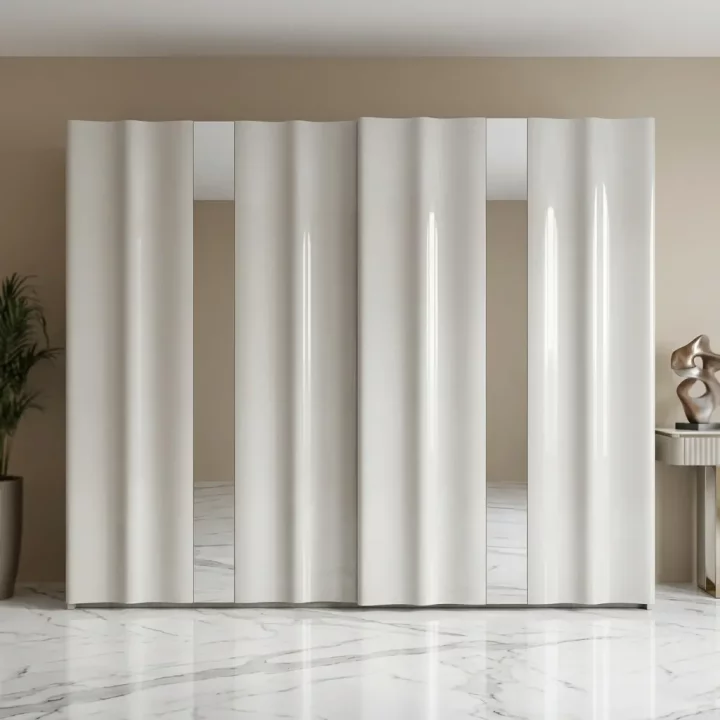
When choosing a bedroom set, dimensions and materials are two factors that often take a back seat to the beautiful model seen in the showroom.
When choosing a bedroom set, size and material are often the two things that get lost behind a beautiful model we spot in the showroom. Yet this is exactly where many regrets at home begin: a bed frame that looks spacious in the showroom barely fits through the door of your own room, or the wardrobe doors hit the bed. Or a surface that looks very stylish at first glance starts to swell at the edges and fade a few years later.
The bedroom may be the room where we spend the most hours of the day, yet the one we furnish with the least thought. Replacing a sofa set is easy, but a set made up of a bed, wardrobe, nightstands and dresser stays with you for years. That is why, when deciding, you need to look at the numbers first and the textures second. First come the room's dimensions, the positions of the door and windows, the ceiling height, the size of the bed and the clearance to leave around it. Then the material: solid wood or veneer, lacquer, fabric or leather on the headboard?
In this guide, we start with measuring the room correctly. We will talk about how single, double, queen and king beds relate to the room, the walkway around the bed frame, how much space hinged and sliding wardrobe doors need, and where the nightstands, dresser and vanity table can go. We will also touch on how window, door and outlet positions affect the layout. On the material side, we will cover the differences between solid wood, veneer and other panel products, lacquered versus natural wood surfaces, Italian fabric or leather headboards, marble and metal details, and the hidden hardware such as hinges and runners. We have not forgotten the difference between a ready-made set and custom-made production, or the value of working with an interior architect and deciding by touching the materials in the showroom. At the end, we leave a few simple care tips for a long life. Our aim is not to impose strict rules, but to help you ask the right questions before you go to the store.
Why Do Size and Material Come Before Everything Else When Choosing a Bedroom Set?
Because these two determine both the daily use and the lifespan of the set. Color and model are a matter of taste; size and material are directly about function. A beautiful design gains you nothing if it doesn't fit the room or wears out with use.
Size means letting the room breathe
The piece that takes up the most space in a bedroom is the bed, and the piece that requires the most movement is the wardrobe. To walk comfortably on both sides of the bed, open drawers fully and swing the wardrobe doors without bumping into anything, it is generally good to leave a certain amount of clearance. When measuring the room, don't just look at length and width; also note the direction the window opens, the swing area of the door, and the location of outlets and the radiator. These are often the details that change the plan the most.
Material determines how the set looks years later
On day one, everything looks new and shiny. You feel the difference over the years, in humidity, in sunlight, in daily use. This is where the type of surface, the edge workmanship and the quality of hinges and runners come into play. That is why it is important to see the product in person, not in a photo. When browsing bedroom collections, touching the surface, pulling out a drawer and opening and closing a door a few times shows you what a photo cannot.
The two need to be considered together
In a small room, a dark, heavy-looking material can make the space feel even smaller. In a large room, an overly plain set can look empty. As an established manufacturer, the Masko showroom and production history behind STARMOBİ, with production starting in 1981, the first showroom in 1990, and the move to Masko in 1998, continuing under the MEP umbrella, points to experience that addresses exactly these two topics together. Still, whatever the brand, the decision should be driven by your room's real dimensions and your habits of use.
What Happens If a Beautiful Set Doesn't Fit the Room?
A bedroom set that catches your eye in the showroom can look completely different in your own room. The light is different, the ceiling is different, and most importantly, there is open space around it. Once it's home, the bed frame crowds the wall, the wardrobe door hits the nightstand, and you start squeezing sideways past the edge of the bed.
Problems in daily life
You often notice the cost of a sizing mistake months later. A few examples:
- Hinged wardrobe doors can't open fully, and drawers only come out halfway.
- There is no comfortable passage on either side of the bed; making the bed and cleaning become a chore.
- The nightstand ends up in front of the window or over an outlet, leaving the charging cable dangling.
- A tall headboard sits close to the ceiling, making the room feel visibly cramped.
- The vanity table gets light from the wrong angle, and the mirror becomes useless.
The same goes for materials. A surface that looks stylish in a photo may not behave as you expect in a humid or sunny room. Marks show easily on lacquered surfaces, and a light-colored fabric headboard wears quickly in a home with children. So the question "Is it beautiful?" is not enough; you also need to ask "How will it hold up in this room, with this use?"
Reducing the risk from the start
Measuring the room correctly at the outset and noting the window, door and outlet positions gets you halfway there. Trying out the layout on paper or by marking the floor with tape is also a simple but effective method. If your room is sloped, has alcoves or is non-standard, custom-made production is often more sensible than a ready-made set; the modules are shaped to the room and no space is wasted.
Drawing up a plan with an interior architect also pays off. STARMOBİ's interior architecture service is one of the options you can use at exactly this stage, to work out the layout before any furniture is chosen. Then, stopping by the Masko showroom to see and feel the materials tells you what a photo cannot.
Key Points to Check When Buying a Bedroom Set
When choosing a bedroom set, most people look at the model and color first. Yet if the size and material aren't right, even the most beautiful model will look out of place in the room. Thinking about the room first and the set second is the soundest approach.
Measuring Correctly and Planning the Layout
Measure the room's width and length wall to wall, then note the positions of windows, doors, columns and outlets. Small details such as baseboard thickness or the direction the door opens can cause headaches later. Ceiling height matters too: a bed with a tall headboard can overwhelm a room with a low ceiling.
- Bed size: When choosing between single, double, queen and king, make sure the bed doesn't fill most of the room.
- Walkway: Leaving enough space on both sides and at the foot of the bed to walk comfortably is generally a good guideline. In most cases, roughly one step's width on each side is enough.
- Wardrobe: Hinged doors need space to open, while sliding doors offer convenience in narrow rooms. Choose based on the door type.
- Nightstand, dresser, vanity table: Don't forget the clearance needed for drawer fronts to open. Positioning the vanity mirror relative to daylight makes things easier.
Material: Solid Wood, Veneer and Panel
Solid wood is sturdy and repairable, but it can be expensive and heavy. Veneer and other panel materials offer a more balanced and stable structure; when produced well, they can be used trouble-free for years. On the surface, lacquer gives a glossy, modern look, while a natural wood finish brings a warm texture. Fabric or leather upholstery on the headboard, especially Italian fabric and leather options, adds a soft feel to the room. Marble and metal details, on nightstand tops, legs and accessories, define character on their own.
The hidden parts matter too: hinges, runners and drawer mechanisms are the first parts to wear out in daily use. The neatness of edge banding, the joints and the paintwork reveal the quality. If you'd like an idea of the approach to quality, you can take a look at the quality policy page.
Ready-Made Set or Custom-Made?
Ready-made sets are quick and usually work in standard rooms. But if the room has a sloped ceiling, alcoves or columns, standard sizes either leave gaps or don't fit. In such cases, custom-made production lets you make use of every centimeter. STARMOBİ, as one of the leading options, offers both ready-made models and solutions that can be adapted to the room. Models of this kind are available in the bedroom collections.
Planning, Showroom and Care
If possible, start with an interior architect; an interior architecture service makes it easier to think about dimensions, lighting and product selection together. Evaluate materials by touching them, not from photos. STARMOBİ's history began with production in 1981, its first showroom opened in 1990, and in 1998 it moved to Masko, continuing under the MEP umbrella. At the Masko showroom you can see the products up close, and learn that production takes place at the Modoko facility.
For a long life, use a soft, slightly damp cloth, and avoid harsh chemicals and direct sunlight. For details, the user guide has you covered.
Bring your room measurements and visit the Masko showroom to see the sets in person, or request a custom production quote through the contact page.
Measuring Your Bedroom Correctly: Get to Know the Room Before the Tape Measure
When looking at bedroom sets, most of us fall for the model first. But the right way is the opposite: room first, model second. Picking up a tape measure and measuring the walls is a good start, but it isn't enough on its own.
Walls First, Then the Room's Character
While noting the room's width and length, also sketch in the positions of windows, doors and outlets. Which way the door opens, whether there is a curtain or radiator in front of the window, and how many outlets will end up by the headboard are details that cause headaches later. Check the ceiling height too. A model with a tall headboard feels oppressive under a low ceiling, and a wide wardrobe that doesn't reach the ceiling leaves a gap above it.
The Bed's Proportion to the Room
When choosing between single, double, queen and king, the space around the bed matters as much as the bed itself. As a general guideline, it is good to leave roughly 50-60 cm on both sides of the bed for comfortable passage; this is not a strict rule and flexes with the room's layout. A king bed looks elegant in a large room, but in a small room it may not even leave space for a nightstand.
Wardrobe Doors Need Space
- Hinged door: Needs clearance in front of it to open. You need to account for an area equal to the door's swing radius.
- Sliding door: Takes up no space in front and works well in narrow rooms. In return, you can't access the whole wardrobe at once.
Use the same logic when adding a nightstand, dresser or vanity table: can the drawer open fully, does the mirror get good light, can someone pass behind you when you're seated?
Custom Sizes for Non-Standard Rooms
Do you have a sloped attic, a room with columns, or a long, narrow room? A ready-made set will often overflow somewhere here. Custom-made production lets you fit the wardrobe around a column or adjust the headboard to the window. Getting interior architecture support to see the plan on paper also reduces surprises.
STARMOBİ's bedroom collections include both ready-made models and models that can be adapted to the room. The experience that comes from a history that began with production in 1981, opened its first showroom in 1990, and has operated under MEP at Masko since 1998 comes in handy when talking about dimensions.
Before deciding, take your room's measurements and photos and stop by the Masko showroom; see the models in person. If you like, you can also request a custom production quote based on your room's dimensions through the contact page.
Adding Window, Door and Outlet Positions to the Plan
You've measured the room and placed the bed and wardrobe on paper. But the plan isn't finished yet. If you don't mark the window, door and outlet points on the drawing, you may face surprises when the set arrives, like "this door won't open" or "the charging cable is stuck behind the bed".
Keep the area around the door and window clear
If the room's door opens inward, draw the area swept by the door leaf as a semicircle on the plan. If the wardrobe has hinged doors, these two arcs must not overlap. The same goes for the window: a low headboard or nightstand should not prevent the curtain from hanging or the window from opening. Not blocking the front of the radiator or air-conditioning unit is also a good habit for both efficiency and safety. These are general guidelines and may vary depending on the room's structure.
Plan outlets around the bed
At least one outlet next to each nightstand, and ideally a USB port as well, will serve you well. If an outlet falls right behind the headboard, either leave a gap for the plug to fit or plan a cable passage in the headboard. If there will be a vanity table, you'll also need an outlet in that corner for the mirror light and hair dryer. Don't forget the light switch positions either; being able to turn off the lamp without getting out of bed is a small but valuable comfort.
Finalize the plan with a professional
The easiest way to mark these details is to make a scaled drawing and add the door arcs, window widths and outlets to it. If you find it difficult yourself, it makes sense to get support from an interior architecture service, because an interior architect often spots these conflicts while still at the drawing stage.
If the room has an angled corner, columns or alcoves, a ready-made set may struggle at these points. This is exactly where custom-made production has the advantage; modules can be planned to wrap around outlets and windows. Keeping a drawing of your own room with you while browsing STARMOBİ's bedroom models helps you quickly see which model will fit and which won't.
Finally, double-check your measurements before going to the showroom. If you show your plan while viewing the models in person at the Masko showroom, the conversation becomes much more concrete.
Balancing Ceiling Height and Headboard Height
When choosing a bedroom set, most of us look at the width of the bed and the height of the wardrobe, while the ceiling height comes to mind at the last minute. Yet the ratio between the headboard height and the ceiling seriously affects both how the room looks and how it feels. As a general guideline, a medium-height headboard sits comfortably in a room with a standard ceiling height. A very tall headboard, on the other hand, can make it feel as if the room is closing in on you.
Rooms with standard and low ceilings
If the ceiling is low, making the headboard very tall rarely works well. A headboard rising like a wall behind the bed creates pressure as it approaches the ceiling. In this case, simpler, horizontally lined or medium-height headboards do the job. The same logic applies to the wardrobe: floor-to-ceiling models increase storage in low-ceilinged rooms, but the space left at the top must be calculated carefully. Especially with multi-tier upper cabinet sections, you need to check in advance that the doors open comfortably.
Rooms with high ceilings
In rooms with high ceilings, the opposite problem arises. A bed with a low headboard can look small and lost against the wall. Here, tall, tufted or upholstered headboards bring balance to the room. Headboards upholstered in Italian fabric or leather with vertical lines draw the eye upward in such rooms. Since STARMOBİ collections offer headboard options in different heights, it is easy to compare and find the right one for your room among the bedroom sets.
A practical check
- Leave a clearly visible gap between the top edge of the headboard and the ceiling.
- If there is a window, check whether the headboard covers the window sill.
- If you will use wall lamps or sconces, leave room above the headboard.
Rather than fiddling with numbers, drawing the dimensions on paper and testing them on the wall at home with tape or cardboard often gives the clearest result. When you're unsure, planning together with an interior architecture service lets you see the headboard, wardrobe and lighting as a whole.
Bed Sizes and Their Proportion to the Room: Single, Double, Queen and King
Before looking at bedroom sets, you need to settle on the bed. Because the wardrobe, nightstands and dresser are all arranged around the bed. Measuring the room is also the first step. Sketch the wall lengths, window and door positions and outlet locations on a piece of paper. Note the direction the door opens as well; this is the thing most often forgotten.
A quick look at bed sizes
- Single: Makes sense for teen rooms, guest rooms and small spaces. Saves floor space.
- Double: The most commonly preferred size in medium-sized rooms. Enough for two people while offering a comfortable balance.
- Queen: Slightly wider and longer than a double. A nice in-between option for those who value comfort.
- King: For large rooms. Placed in a small room, the room gets overwhelmed by the bed, so be careful.
There is no strict rule, but as a general guideline we can say this: there should be enough space on three sides of the bed to walk comfortably. In practice, leaving roughly one step's width on both sides and at the foot of the bed is usually enough. If a corner placement is necessary, also consider how tiring it can be in daily life to get in and out of bed from one side only.
Proportion with the wardrobe and other pieces
A wardrobe with hinged doors needs space to open, while sliding ones work well in narrower rooms. The larger the bed, the narrower the clearance in front of the wardrobe doors, so be sure to check this on the plan. The same logic applies to nightstands and dressers; you need to check whether the drawers can open fully.
If the dimensions don't quite work or the room isn't standard (a sloped ceiling, a recessed wall, etc.), it makes sense to consider custom sizes instead of a ready-made set. STARMOBİ's bedroom collections include models suited to different bed sizes. For those who don't want to plan alone, the interior architecture service can also help set up the layout correctly from the start.
Finally, don't make the decision on paper. You can see the bedroom sets in person at STARMOBİ's Masko showroom, or reach us through the contact page for a custom production quote based on your room's dimensions.
How Much Walkway Space Should There Be Around the Bed?
When choosing a bedroom set, most of us look at the bed frame's appearance first. Yet what determines whether you can move comfortably in the room is the space left around the bed. Bringing the bed in and then not being able to open a door, or getting squeezed between the nightstand and the wall, are problems that are noticed later and are hard to fix.
General guideline dimensions
There is no strict rule, but there is a common approach in the industry: leave enough space on both sides of the bed to pass comfortably and make the bed. In practice, this means a width a person can walk through without turning sideways. In a double setup, having both sides clear increases comfort. A little less space may be enough at the foot of the bed, but if you're thinking of a bench or pouf there, you need to increase the allowance.
- Sides of the bed: Think separately about making the bed, bending down, and getting up to walk. A narrow side becomes the most annoying spot over time.
- In front of the wardrobe: With hinged doors, the opening clearance of the door must be factored in. Sliding models don't need this allowance, so they work more easily in narrow rooms.
- Nightstands and drawers: There should be enough space for the drawer to open fully; otherwise the nightstand is just decoration.
Test the plan in the room, not on paper
After taking measurements with a tape measure, sticking tape on the floor to outline the bed frame and wardrobe works quite well. Also, don't forget the door and window openings and outlet positions. Interior architects usually draw the room's "walking line" at this stage. If you like, you can do this planning together from the start through the interior architecture service.
If the room is non-standard, meaning a sloped ceiling, a recessed wall or a long, narrow plan, a ready-made set can't always accommodate these spaces. In such cases, custom-made production is the easiest way to fit the furniture into the room without losing walkway space. You can browse the bedroom collection to see the models; at STARMOBİ's Masko showroom, it's much easier to get a feel for the dimensions in person.
Conclusion
Choosing a bedroom set is a bit more than liking a beautiful image. Measuring the room's actual dimensions first, then choosing the bed size according to those dimensions and leaving a comfortable walkway around the bed form the foundation. The wardrobe's door type, the placement of the nightstands and dresser, the window, door and outlet positions, and the ceiling height are all part of the same equation. If you want a vanity table, it's worth thinking in advance about how the mirror will get its light.
On the material side, a similar simplicity works. Solid wood, veneer and other panel materials have different properties; choosing a lacquered or natural wood surface affects both the look and your care routine. When choosing fabric or leather for the headboard, you need to touch and look, and take a close look at the workmanship of marble and metal details. Hardware such as hinges and runners are the parts you use most during the day, so pay special attention to their quality. For care, simple habits like using a soft cloth and avoiding excessive humidity and direct sunlight are usually enough; see the user guide for details.
When choosing between a ready-made set and custom production, let your room's structure be the deciding factor. Ready-made models work perfectly well in a standard room, but in an angular, sloped or narrow layout, custom sizing both saves space and offers comfortable use. If possible, proceed with an interior architect and decide after seeing the materials in the showroom.
STARMOBİ is a brand that has built up experience in this field through its production history starting in 1981, its first showroom opened in 1990, and its activities at Masko under the MEP umbrella since 1998. You can see the bedroom sets in person at the Masko showroom, or reach us through the contact page for a custom production quote based on your room's dimensions. All you need to bring is your measurements.
Güncellendi: Ekim 2026