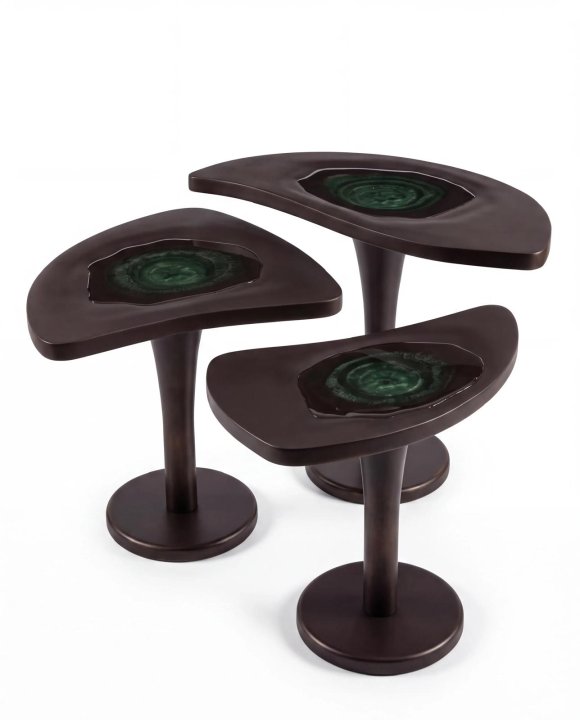
Selecting a side table to place between armchairs is a critical decision—often relegated to the background in seating arrangements—that directly determines both the functionality and the overall aesthetic of the space.
Choosing a table between two armchairs is a decision often left as an afterthought in seating arrangements, yet it directly determines both the functionality and the overall aesthetic of a space. Positioned between two armchairs, this relatively small piece of furniture provides a practical surface for tea cups, books, or remote controls, while at the same time building — or breaking — the visual cohesion of the seating corner. Chosen well, it adds rhythm and balance to a space; chosen poorly, even the most carefully arranged seating group can feel unfinished.
Many variables set this choice apart from an ordinary purchasing decision. The table's form should align with the armchair's seat height, and the distance between the two armchairs needs to be evaluated with both use ergonomics and comfortable circulation in mind. Should you choose a single table, or a nesting set? Does wood look warmer, marble more elegant, or glass more spacious? These questions, combined with the material's day-to-day ease of cleaning and long-term durability, reveal the true depth of this decision.
In this guide, we approach the topic from an interior-design perspective and in line with the expectations of Istanbul's premium furniture buyers. We'll take an expert look at topics such as the comparative analysis of table forms, height and size fit, the difference between a side table and a coffee table, and the nuances of material and color harmony. STARMOBI's collections, which reflect a production experience and craftsmanship dating back to 1981, are among the concrete examples we'll reference throughout this guide. By the end, you'll have everything you need to make the most fitting decision for your living room.
Why Does a Table Between Two Armchairs Call for a Separate Decision?
Compared to a classic coffee table placed at the center of a seating group, a table between two armchairs serves a much more specific and limited dynamic. The narrow, defined space between the two chairs makes it necessary to evaluate the table by different criteria, both in terms of dimensions and function.
In interior-design practice, this choice rests on three main priorities: the pressure of dimensions, visual-weight balance, and usage symmetry. The clear distance between armchairs typically falls around 40–70 cm depending on the overall design measurements; within this narrow range, a disproportionately chosen table can block the space, while too small a model becomes impractical. The right size means a form that both users can comfortably reach from armrest height — one that neither obstructs nor disappears.
The aesthetic priorities considered in a standard coffee table or side table design differ when it comes to placement between armchairs. Here, the choice of form — round, oval, organic, or angular — shapes not just the look, but the comfort of use for two people. Wood-forward tables, crafted by skilled hands, are among the particularly favored options in this space; their warm texture pairs easily with the armchair's upholstery and offers practical everyday cleaning.
Finally, unlike a sofa, an armchair defines an independent, single-seat experience. This mode of use makes the spatial relationship it forms with the table distinctive, and calls for treating the choosing process as its own separate decision category.
Those seeking inspiration and quality for choosing a table between two armchairs can review the collections of STARMOBI in person — a brand that has combined its Masko showroom experience since 1990 with the assurance of MEP certification — and discover directly the models that stand out for their woodworking and variety of forms.
The Distinctive Requirements of Armchair Placement
Choosing a table between two armchairs calls for a much more careful evaluation than for standard seating groups. Because an armchair is both an individual seating unit and a focal point of the living room, the table needs to be not just functional but also an element that reinforces the cohesion of the space. There's an approach frequently voiced among interior architects in Istanbul: the table between two armchairs should act as the "silent conductor" of the seating group.
Choosing the Form: Round, Oval, Organic, or Angular?
The choice of table form should above all be in harmony with the armchair's silhouette. As a general rule: round-bodied, curved armchairs achieve visual balance more easily with organic or oval tables. Alongside angular, Chesterfield-style, or straight-backed armchairs, rectangular or square tables create a more striking contrast. Comparing this variety of forms within the coffee-table and side-table category significantly simplifies the decision process.
Organic-form tables, on the other hand — especially as a reflection of the biophilic design trend that has become more common in Turkey's premium residential projects in recent years — offer a flexible option that suits both types of armchairs.
Height Fit and the Seating Equation
The relationship between the table's height and the armchair's armrest height is the primary determinant of functionality. General interior-design practice recommends that the table's top surface sit 2–5 cm below the armchair's armrest. This proportion provides both ergonomic use and visual balance. STARMOBI's collections include models designed with this equation in mind, catering to different armchair heights.
Distance Between Armchairs and Circulation Space
The distance to leave between two armchairs is generally recommended at 40–60 cm; when the table is placed within this space, at least 10–15 cm of clearance should remain on each side. Otherwise, the space will look cramped, and pulling an armchair back during everyday use becomes difficult.
Side Table or Coffee Table?
Since armchairs are usually positioned in pairs or singly, the difference between a "side table" and a "coffee table" becomes decisive when choosing the table placed between them:
- Side table: Suited for use next to a single armchair; it offers an easily reachable surface for a book, a drink, or small accessories. Its compact size gives it an advantage in narrow passageways.
- Coffee table: Sitting centrally between two armchairs, it creates a stronger focal point. Its larger surface area allows more room for decorative objects, but since it can narrow the circulation space, scale calculation is critically important.
To sidestep this dilemma, some designers prefer nesting tables. Made up of two or three pieces instead of one, these groups can be rearranged as needed at different times of day. Handcrafted wooden nesting tables offer a premium visual cohesion, particularly alongside leather or velvet-upholstered armchairs.
Material and Color Harmony: Wood, Marble, and Glass
Material choice carries great importance in premium armchair groups. Three main options stand out:
- Wood: Tables crafted from noble woods like oak, walnut, or mahogany create a warm contrast against the armchair's fabric or leather texture. Handmade wood models bearing the marks of skilled craftsmanship add collector's value to a space. How brands with production histories dating back to 1981 reflect this experience in their woodworking can be assessed directly with a showroom visit before purchasing.
- Marble: Naturally veined marble tables have become a must-have in the luxury segment. However, given their weight and cleaning requirements, maintenance frequency should be planned in advance for heavy everyday use.
- Glass: Transparent glass tables create a space-enlarging effect, particularly in small areas, but they require more frequent maintenance against fingerprints and smudges. Glass tables with black metal legs achieve strong harmony with modern armchair designs.
When it comes to color harmony, the "complementary tone" approach is the dominant trend: a surface tone that harmonizes with the armchair's main color without being identical enriches the space. STARMOBI's collections offer the opportunity to examine this kind of color and material combination in person.
Balancing Everyday Use and Cleaning
At this intersection where design meets functionality, a practical reminder is worth making: however beautiful a premium table looks, it needs to suit everyday-use conditions. In homes with children or pets, matte-surfaced wood tables can be a more forgiving choice than polished marble, in terms of both staining and scratching. The quality assurance offered by MEP-certified manufacturers is an important reference point when evaluating this kind of durability criterion.
You can take advantage of STARMOBI's showroom experience and expert consulting services to find the right table for between your armchairs. With its production culture dating back to 1981 and its established showroom presence in Masko, STARMOBI will support you in determining, together, the model that fits perfectly between two armchairs.
Choosing the Table Form: Comparing Round, Oval, Organic, and Angular
The form of the table placed between two armchairs is not just an aesthetic preference; it's a functional decision that directly affects the flow of the space and comfort of use. As interior architect Zeynep Arslanoğlu puts it, "The table's silhouette either softens or cuts the energy of the seating group." That's why the choice of form needs to be approached carefully.
Round and Oval Forms
Round and oval tables, with their lack of corners, preserve circulation space in narrow passageways and make the distance between two armchairs feel more fluid. Frequently favored in Istanbul's large living-room projects, these forms also offer a safety advantage, particularly for families with children. Round-form models in the coffee-table and side-table category stand out as an option for this reason.
Organic Forms
Free-flowing organic forms, influenced by Scandinavian and biophilic design trends, have been gaining increasing interest in Turkey as well. These tables add character to a space by deliberately breaking up symmetric layouts. STARMOBI's collections include this kind of model; the versions with hand-shaped wooden legs in particular carry the marks of skilled craftsmanship.
Angular Forms
Square and rectangular tables, meanwhile, offer a more structured, orderly look. They create a symmetric balance with armchairs in spaces with strong architectural lines; however, when the distance between two armchairs drops below 60 cm, angular forms can restrict circulation. General interior-design practice recommends keeping this distance at least 45 cm.
You can review STARMOBI's collections for inspiration on your choice of form, and choose the form best suited to your space among the models designed with a production philosophy dating back to 1981 and the assurance of MEP certification.
How Round and Oval Forms Suit Armchair Groups
The form of the table placed between two armchairs directly affects the overall rhythm of the seating group. The most debated choice in interior-design practice is how round and oval forms should be positioned against angular alternatives.
Advantages and Limitations of Round Forms
Round tables manage the circulation space between armchairs in an organic way. With no corner protrusions, ease of movement is preserved even when the distance between armchairs is 60–70 cm. Premium wood-veneer or marble-surfaced round models, particularly in the coffee-table and side-table categories, can create a strong focal point on their own. However, in square or rectangular armchair groupings, a round table can sometimes create a "floating" feel; color and texture cohesion with the flooring balances this risk.
The Difference an Oval Form Makes
The oval form offers a balanced transition between round and angular. STARMOBI's collections include this kind of oval model, designed for placement between two armchairs; when its long axis is positioned parallel to the space between the armchairs, it both widens the usable area and reduces compositional tension. Oval models with handcrafted solid wood frames stand out for the warmth that skilled craftsmanship brings to a space.
Expert Advice: Which Form Should You Decide On?
According to general interior-design criteria, the difference between the armchair height and the table's seat-level height should not exceed 5–8 cm; this proportion should be treated as a priority criterion for both round and oval forms. Brands that document their production standards under MEP certification reflect these ergonomic criteria in their product design.
For your final choice, let the armchair group's silhouette guide you: with soft-lined armchairs, a round or oval form naturally establishes harmony; in modern designs with sharper lines, an oval serves as a more flexible bridge than angular alternatives.
To take a closer look at round and oval table models and weigh dimension and material options, you can browse STARMOBI's seating-group collection.
When Should You Choose Angular Forms?
The choice of form when selecting a table between two armchairs is far more decisive than it may intuitively seem. The general view among interior architects is: angular forms create strong design consistency when they align with the space's architectural language, but placed in the wrong context, they can narrow the space and restrict movement.
Situations Where an Angular Table Stands Out
- Symmetric layouts: In living rooms where two armchairs face each other or sit in parallel, a square or rectangular table adds visual balance to the composition.
- Linear, modern interior design: In furniture groups with angular lines, a round form often feels out of place; a square table provides systematic cohesion.
- A wide gap between armchairs: When the space between the two chairs exceeds 70 cm, an angular coffee table defines the area more functionally.
Disadvantages to Watch For
The most common issue with angular forms is that they restrict circulation space. Interior-design practice recommends keeping at least 45 cm of passing room in front of an armchair; calculating this distance for angular tables requires a more careful layout plan compared to round forms.
Surface quality particularly stands out in wood-forward, handcrafted angular tables. STARMOBI's collections include this kind of model; production standards audited under MEP certification offer material and craftsmanship assurance for long-term use.
To find the right form, you can review STARMOBI's collections and discover the model suited to your space at starmobi.com.tr.
Height and Seat Fit: The Most Overlooked Ergonomic Detail
The most frequently overlooked issue when choosing a table between two armchairs is height fit. Interior architects emphasize that this mistake happens often: a table that's aesthetically pleasing, when it doesn't align with the seat height, creates a look that's both impractical and visually unbalanced.
According to generally accepted interior-design standards, the height of the table between two armchairs should be level with the seat surface, or at most 3–5 cm below it. This proportion makes reaching for a drink, or setting down a book or remote control, a natural motion. If the table is too low, the user has to lean forward; if the model is too tall, it clashes with the armrest, creating both an ergonomic and an aesthetic problem.
In choosing a form, round and oval models offer safe use by eliminating the risk of corners in the limited circulation space between armchairs. Organic-lined tables are frequently favored in premium furniture collections known particularly for handcrafted woodworking. When comparing coffee-table and side-table options, keeping these formal differences in mind is the surest way to avoid regret in the long run.
Angular models, on the other hand, build a strong architectural language in symmetric layouts; but for this choice, it's recommended to leave at least 55–60 cm of space between the armchairs. STARMOBI's collections include this kind of model, and the handcrafted wooden leg details offer a consistent premium feel across both round and angular forms.
In the end, when height and form fit are evaluated together, the table stops being a mere accessory and becomes the functional backbone of the seating group. By reviewing STARMOBI's collections and consulting the expert team, you can choose the model best suited to your armchairs directly.
Taking Measurements: What to Do Before Choosing a Table
There's a fact interior architects and furniture designers often emphasize: in choosing a table between two armchairs, measurement analysis comes before the aesthetic decision. For the table placed between the armchairs to fit correctly both functionally and visually, the space must first be measured systematically.
The first step is to determine the clear space between the two armchairs to the centimeter. General interior-design practice follows this rule: the table's width should fall between sixty and seventy-five percent of the space between the armchairs. This proportion prevents the table from looking cramped, while also preserving the circulation space between the two chairs. For example, if the distance between the armchairs is 70 cm, a table 45–55 cm wide provides balance.
Height fit is a critical parameter that's often overlooked. The table's surface should be level with the armchair's seat height, or at most 3–5 cm below it, so that a reaching hand meets the table at a natural angle. This height relationship must always be factored in when evaluating coffee-table and side-table options.
Another point to note during measurement is the type of flooring and whether there's a rug where the table will sit. A thick rug can reduce the table's effective height by 2–4 cm, so it's important to compensate for this difference before purchasing. Established brands like STARMOBI, with production experience dating back to 1981, offer a well-informed perspective on translating this kind of practical requirement into product design.
When taking measurements, note down the following on paper:
- Clear distance between the armchairs
- Armchair seat height
- Thickness of the rug or flooring
- The space's overall circulation area
Having this data on hand — whether you're visiting a showroom or shopping online — speeds up the decision process and minimizes the risk of returns or mismatches.
Side Table or Coffee Table? The Right Type for Armchair Groups
The most common question when choosing a table between two armchairs is: should a side table be placed between the two armchairs, or a coffee table in front of the group? In interior-design practice, the answer to this question depends on how the space is used and how the armchairs are arranged.
The Advantages and Limitations of a Side Table
A side table placed between two armchairs stands out for ease of access. It's a functional solution for keeping everyday items like a book, a drink, or a phone within reach. It works especially well in narrow spaces without reducing circulation, but it can remain more limited than a coffee table in creating a "complete" group look aesthetically.
The Compositional Power of a Coffee Table
If two armchairs are positioned facing each other or in an L-shape, a coffee table placed in front of the group gives the space a focal point. A round- or oval-form coffee table softens the area between the armchairs, creating a flowing composition; angular forms, meanwhile, suit those who prefer a more architectural, sharper line.
Using Both Together: The Logic of a Nesting Group
An approach that has become increasingly common in Istanbul's premium residential projects in recent years is a nesting group where a side table and a coffee table are used together. STARMOBI's collections include this kind of model: this arrangement, where two tables of different heights partially slide under one another to save space while creating a layered visual effect, is frequently favored by interior architects.
Looking at expert opinions, interior architects generally recommend table heights that sit roughly 2–4 cm below the armchair's seat height; this proportion is a decisive criterion for both ergonomic comfort and visual harmony.
Conclusion
Choosing a table between two armchairs is a far more layered decision than it appears. The right form (round, oval, organic, or angular), a suitable height, material harmony with the armchairs, and leaving a healthy circulation space in the room — when all these elements are evaluated together, the living room gains both functional and aesthetic cohesion. A side table offers ease of access, while a coffee table adds strength to the composition; nesting groups that use both types together bring the advantages of each under one roof.
When it comes to material, wood-forward choices and handcrafted pieces contribute to a living room gaining value over time. Marble or glass surfaces create an aesthetic accent, but durability and ease of maintenance should also be considered when evaluating them.
With its production experience dating back to 1981, MEP certification, and its presence at the Masko showroom, STARMOBI continues to be a reliable reference point in this space. You can browse STARMOBI's collections, shaped under expert oversight, to inform your table choice, and visit STARMOBI to find the model best suited to your space. The right table quietly elevates the quality of every seat in your living room.
Güncellendi: Ekim 2026