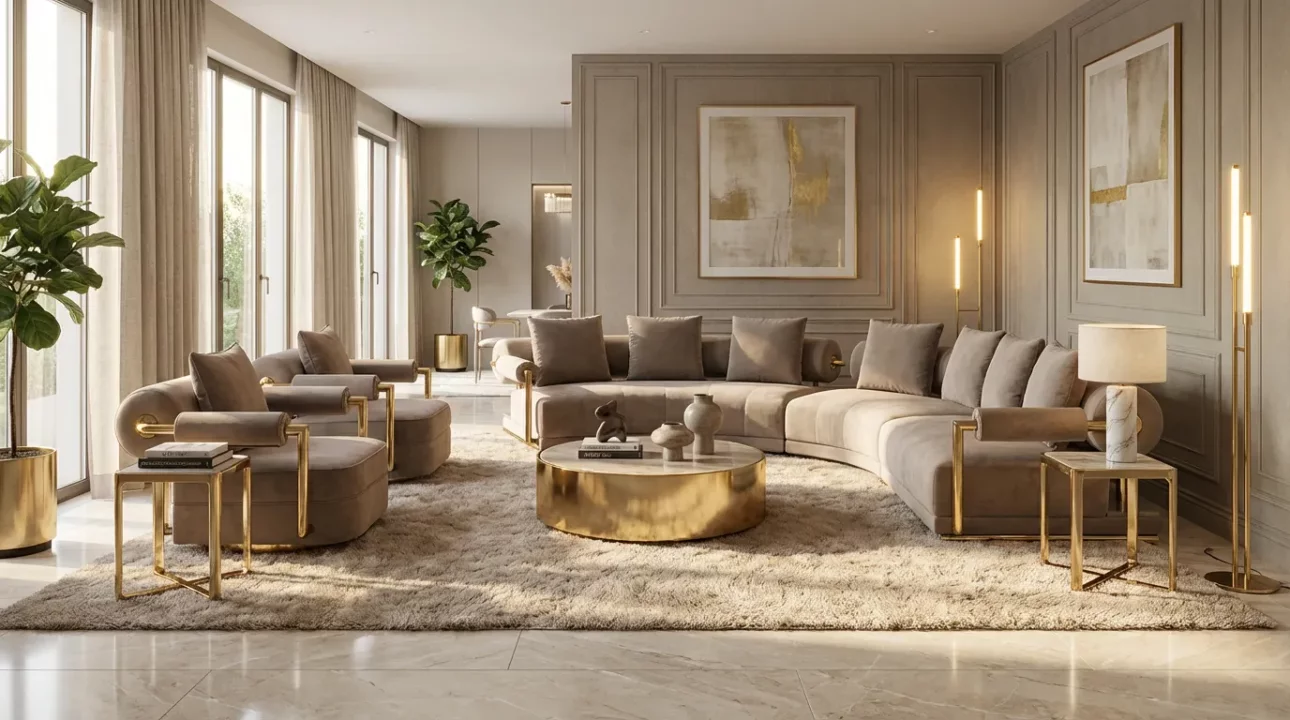
Selecting luxury villa furniture in Istanbul is a process that entails far more than many people realize.
Choosing luxury villa furniture in Istanbul is a process that involves far more than most people think. It's not just "that sofa looks nice, let's get it" — it means being able to picture in advance the character that will run through the whole home, the weight the space will convey, and how the chosen material will look ten years from now. And for those in the city who want to make serious decisions on this front, there are genuinely different worlds waiting for them.
Modoko, Masko, Nişantaşı — these three addresses on Istanbul's furniture map each operate on a completely different logic. One is a pure production zone, another an established showroom destination, and another offers a small, selective boutique experience. Those who enter this maze without knowing which is the right door end up losing both time and budget. Yet reading this geography correctly means putting a villa project on the right footing from the start.
Add the matter of custom design on top of that. Turkey's premium residential projects have, in recent years, increasingly leaned toward "bespoke" furniture — pieces made entirely to measure, custom-built for that specific space. There are a few concrete reasons behind this: villas now contain spaces with unconventional layouts that don't fit standard dimensions. Interior architects prefer to work directly with manufacturers for more original results. And homeowners realize — sometimes only after a few disappointments — that the space in front of them can't be filled with an off-the-shelf configuration.
Wood sits right at the center of this equation. The reason natural wood and craftsmanship have become such a strong preference in premium projects isn't purely aesthetic. The feeling wood gives over time, the way it retains value even years later, the way it can turn into something almost alive in the hands of an experienced craftsman — all of this comes into play. The difference between a dining table produced by an established workshop working with solid walnut, oak, or mahogany and a ready-made piece starts accumulating from the day you move in, every evening you sit down to eat.
In this article, we'll cover Istanbul's furniture geography with a clear roadmap. What exactly is the difference between Modoko and Masko, how does Nişantaşı fit into this picture, and what does it take to develop a custom villa furniture project together with an interior architect? We'll try to convey the journey — from the showroom visit to production, from material choice to final installation — with industry observations and concrete assessments. The knowledge needed to make the right decision isn't actually that far away.
Istanbul's Furniture Geography: Three Different Worlds
When furniture comes up in Istanbul, everyone thinks of a different address. Each of these addresses operates on its own logic and isn't a substitute for the others — though most people only understand this after going door to door.
Modoko is an industrial zone located in Bağcılar, made up largely of manufacturing workshops. This is where furniture is actually made, where manufacturers run their own facilities. It can be the right address for those wanting to place a custom order directly with a manufacturer or looking for a price advantage on large projects. But expectations need to be adjusted: there's no showroom atmosphere here — it's more a process of stepping into workshop doors, talking shop technically, and knowing the industry.
Masko, on the other hand, is something else entirely. Located on the European side, Masko is one of Istanbul's most established furniture showroom destinations. Here, it's not manufacturers but brands that open their storefronts; you can compare collections side by side and see different segments in a single day. It's also a critical address for firms with a strong corporate structure: brands carrying MEP certification offer serious assurance in terms of quality standards and accountability. In large villa projects, these kinds of documents might look like a minor detail on paper, but their importance becomes very clear when things reach a point of dispute or late delivery.
STARMOBI is one of the established firms that has been part of this structure for a long time. Its manufacturing history goes back to 1981, its first showroom experience to 1990, and it joined Masko in 1998. Looking at the firm's corporate history, you can see how decades of accumulated craftsmanship are reflected in its collections.
Nişantaşı, meanwhile, offers a different atmosphere entirely. Small but selective showroom storefronts, nestled among luxury clothing boutiques. It's an appealing address for the premium segment — but because collections are kept limited, finding exactly the design you're looking for there isn't always possible. It's a distinct experience in terms of pace and atmosphere, but it may not be enough on its own for those who need custom production.
What determines the right region for you is the size of your project, how much customization you want, and whether you'll be using interior-design services. Villa projects generally require drawing on more than one source — and at that point, working with a structure that knows the industry well and can manage the entire process, from manufacturing to showroom, makes a real difference.
To get inspired on custom-design villa furniture, browse STARMOBI's collections, or take a look at completed villa projects, you can visit STARMOBI's website. It's also possible to get information on made-to-measure production, material selection, or collaborating with an interior architect — you can reach out directly through starmobi.com.tr.
What Is Modoko, and What's It For?
For those who haven't heard of it, briefly: Modoko is a large industrial complex located in Istanbul's Bağcılar district, made up of furniture manufacturing and production facilities. It's not a store — it's a workshop. In other words, you can walk around here, but you won't find a finished product in front of you — you'll mostly need to follow the manufacturing process closely.
Modoko's importance for villa projects becomes clear right at this point. For a large residence or a custom villa, the production made to the dimensions you need comes not from mass-produced goods but from facilities like these. An interior architect puts the design on paper; then finds the right manufacturer, and the process begins. Wood selection, veneer quality, hand-sanding, layers of varnish — all of this takes shape in production-focused zones like Modoko.
Masko, on the other hand, is formally a showroom area. It shouldn't be confused with a production zone. Quality-assurance mechanisms like MEP certification also gain meaning within this picture — when the question of who manufactured it and to what standard is being asked, this certification becomes a critical reference point.
The most common complaint we hear when it comes to villa furniture is: "I ordered from the catalog, and it didn't suit my home." The reason is usually that a space analysis wasn't done before production. Decisions made without involving the interior-design process end up costing dearly later. Dimensions, texture, wood species — all of these get lost in the catalog's two-dimensional photo.
Brands like STARMOBI aim to fill this gap by offering both manufacturing competence and design guidance together. Looking at the collections, it's clear that craftsmanship-forward models with solid wood details in particular speak to villa projects. It's not a standard furniture catalog — it's a customizable starting point.
Masko: The Showroom Experience and Its Professional Buyer Base
The first time you walk into Masko, you understand it — this isn't a shopping mall. It's a professional environment; a showroom district designed for interior architects, project developers, and villa owners. The visitor profile alone makes a difference: purchasing decisions are usually made on-site, alongside an expert eye.
Knowing that brands have been gathered here since 1998 and operate within the MEP certification framework builds trust when making a choice. MEP auditing isn't a random document; it requires meeting certain criteria in terms of brand quality, service standards, and showroom management. That tells you, as a customer, that the brand you're looking at has established a serious presence here.
Pros and Cons: From a Professional Buyer's Perspective
One of Masko's strongest points is being able to see collections physically. You can feel the quality of the wood, the texture of the upholstery, the weight of the door hinges with your own hands. This tactile experience is critical for villa projects; a decision made by looking at a catalog often changes once you get to the actual space. That's why manufacturers like STARMOBI also present the physical experience as an inseparable part of their collections.
On the other hand, there's a downside too: price negotiation in a showroom setting can be stricter, and especially when it comes to bespoke (custom-sized) work, the process can become longer and more complex. Buyers who come without an interior architect can sometimes get lost among the options. At this point, getting professional interior-design support both shortens the process and helps you use your budget more efficiently.
There's an opinion often heard in the industry: "Don't go to Masko alone — go with an expert." This advice isn't without reason. However good the showroom experience is, coordinating a villa-scale project requires technical knowledge — many details, from material selection to delivery schedules, need to be worked out at the table.
Examining the collections at Masko is the fastest way to get a concrete sense of the options available. To see which style suits your project and then to start the bespoke manufacturing process, you can get in touch with STARMOBI.
Nişantaşı's Place in the Luxury Furniture Scene
Nişantaşı is a neighborhood that sits in the shadow of fashion boutiques and gourmet restaurants, but is actually home to some of Istanbul's most selective furniture and interior-design offices. The showrooms here don't operate on shopping-mall logic — instead, they offer custom solutions to villa and residence owners through a project-based consulting approach. A customer usually walks into Nişantaşı saying "I don't know what I'm getting, but it should be quality," and walks out with an interior-design plan in hand.
A significant portion of the brands in this neighborhood work with trust factors based on industry standards such as MEP certification. This certification offers an important reference point for both the customer and the interior architect, especially in large villa projects. Choosing a brand with documented manufacturing standards instead of a random manufacturer — especially when craftsmanship and custom design are involved — directly affects the outcome of the project.
The most distinctive difference that sets Nişantaşı apart from Modoko or Masko is the experience itself. While Modoko is a manufacturing and wholesale point, the studios here offer more of a collaborative working environment with an architecture office. When a customer walks into the showroom, they're first listened to, then given recommendations. This consulting process is particularly valuable for wood-forward, craftsmanship-focused products — because it's nearly impossible to make the right choice without knowing which wood species creates which atmosphere, or how finishing techniques interact with light.
STARMOBI is one of the standout options in this context as well. Looking at its collections, a wide range that speaks to both classic and contemporary villa projects stands out. It's not just ready-made products — custom manufacturing options tailored to the villa owner's lifestyle and the space's architecture are also offered.
In the end, Nişantaşı is a place you go not to buy furniture, but to develop a project. And if you're sitting down with your interior architect to make a long-term design decision, the experience this neighborhood offers really does make a difference.
Boutique Store or Large Showroom?
Every villa owner asks this question sooner or later. And the honest answer is: both have their place, but they serve very different purposes.
The boutique showrooms in Nişantaşı's back streets usually carry a single design philosophy, or the signature of a particular craftsman. When you walk in, you reach an interior architect or a brand representative directly. If you want to run the custom-design process together, discuss material choices face to face, and hold fabric and wood samples in your hands, this format offers a real advantage. It's strong in terms of a personalized experience, but it can sometimes be limited in terms of collection variety and delivery infrastructure.
Masko, on the other hand, is a completely different story. This organized sector, where hundreds of firms operate side by side, offers furniture buyers a broad basis for comparison. You can see dozens of different brands and manufacturing philosophies in a single day. MEP-certified showrooms in particular are an important reference point for distinguishing reliable manufacturers who have passed independent audits. This certification points not to a random panel manufacturer, but to firms with a serious manufacturing history and corporate structure.
Which Is More Suitable for a Villa Project?
When it comes to custom-design — that is, bespoke — furniture, choosing a firm you can work with alongside your interior architect from the very start of the process is critical. There are firms in the large showrooms that offer this; in boutique stores, it's almost a mandatory service. Structures that offer interior-design services promise a far more consistent process in villa projects, from material coordination to execution tracking.
For those who want to prioritize wood-forward premium manufacturing, craftsmanship, and skilled artistry, it's worth looking at the brand's history. Firms with an established manufacturing background like STARMOBI have this kind of custom-design model in their collections — both in the showroom setting and for project-based orders.
In short: a large showroom offers a wealth of options, a boutique store strengthens the personal touch. But the real issue isn't the size of the venue you choose — it's the manufacturing quality behind it, and the attention it can give you.
If you're looking for the right furniture partner for your villa project, browsing completed projects can be a good starting point. After reviewing the collections and manufacturing history, you can discuss the solution best suited to your needs directly with the STARMOBI team.
Why Is Custom-Design Furniture Preferred for Villa Projects?
When you own a villa, or when you're developing a large residential project, an inevitable question comes up: should we choose from a ready-made catalog, or have it designed from scratch? The answer is often hidden in the space itself.
It wouldn't be right to overlook the advantages of standard catalog furniture. A wide range of options, predictable pricing, fast delivery — these are all real. But in a large, personal space like a villa, the real issue is this: the space's own unique proportions, corners shaped by the architect's design, the ceiling height, the angle at which natural light falls — none of these are accounted for in a catalog.
This is exactly where custom (bespoke) furniture proves its worth. A process carried out together with an interior architect makes it possible to treat the furniture as an organic part of the space. This understanding is clear in approaches like STARMOBI's interior-design service: the furniture is fitted to the project, not the project forced to fit the furniture.
The difference is also clear on the material front. Wood-forward premium solutions, especially pieces shaped through craftsmanship, stand apart from mass production in terms of visual depth and long-term durability. Voices from the industry confirm this too: in villa-scale projects, skilled artistry and material quality take priority over cost optimization.
Of course, custom design has its downsides too. The process is longer, coordination is more intensive, and the flexibility to make changes becomes limited after a certain stage. This is something to factor into your choice knowingly.
The project history of MEP-certified manufacturers operating in Masko offers a reliable reference point in this process. The experience of firms that began manufacturing in 1981, opened their first showroom in 1990, and joined Masko in 1998 becomes especially decisive in large-scale villa projects.
STARMOBI's collections include models suited to this kind of bespoke approach. If you'd like to get ideas for your villa project or take a direct look, browsing the collections can be a good starting point.
Practical Differences Between Bespoke and Ready-Made
If you're about to embark on a villa project, sooner or later you'll have to ask yourself this question: should I choose from a ready-made collection, or design from scratch? The answer, in fact, usually depends not on the budget but on how distinctive the space is.
The biggest advantage of the ready-made furniture option is delivery time. You can have the product you saw in the showroom in your home within a few weeks. Established firms in Masko — including those operating under the MEP umbrella — are experienced in this; brands that have been manufacturing since 1981, opened their first showroom in 1990, and joined Masko in 1998 know both logistics and inventory management well. MEP certification is also a concrete indicator of this reliability.
But there's another side to this too. Ready-made products are manufactured to standard dimensions. In villa projects, that "standard" often doesn't quite fit: ceiling heights differ, passage angles are narrow, window placement is unexpected. This is exactly where bespoke comes into play.
Custom-design furniture is shaped entirely around the space, according to the interior architect's vision. Everything, from the wood species down to the hinge detail, is discussed, tried out, and revised. This process is long — sometimes it can take months — but the result truly belongs to that space. Firms that offer interior-design services alongside furniture manufacturing significantly ease coordination during this process.
In STARMOBI's collections, you can find the opportunity to compare both approaches; there are both ready-made options and craftsmanship-forward solutions for custom villa projects. Whatever the size of the villa, the real issue is being able to make a choice that suits the spirit of the space.
In short: ready-made furniture offers speed and practicality; bespoke brings out the true potential of the space. When choosing between the two, having an open conversation with your interior architect about budget and timeline largely prevents later disappointments.
By browsing STARMOBI's collections, you can discover furniture options suited to your villa project, and get in touch with the team for your custom-design process.
STARMOBI's Custom Manufacturing Approach
Güncellendi: Ekim 2026