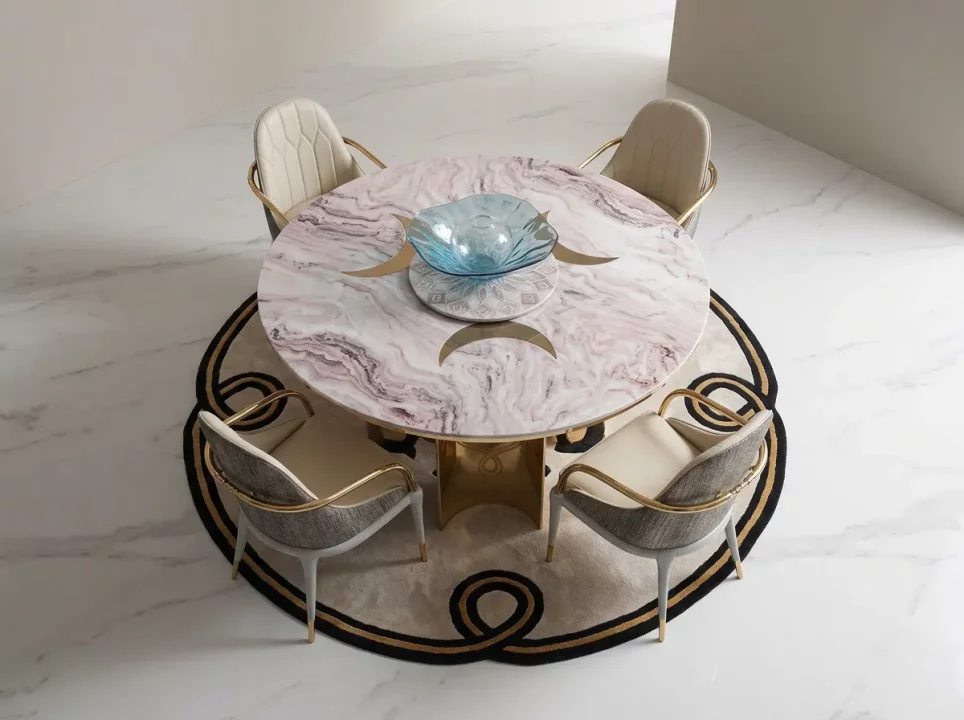
The marble table continues to be a timeless choice that blends elegance with functionality in home and office décor.
Marble Table Guide: Models, Prices and Tips for Choosing the Right One
A marble table remains a timeless choice that brings elegance and functionality together in home and office interiors. The unique richness of natural stone turns every table into an individual design piece, while the right choice of marble, dimensions, surface finish and craftsmanship determines the long-term value of the investment.
In this guide, we examine marble tables from every angle: popular stones from Carrara to Nero Marquina, models for different applications, realistic price ranges in the Turkish market, maintenance requirements and the technical details that should be considered before purchasing. We also draw on the project-based production approach used by established furniture manufacturers such as Starmobi.
What Is a Marble Table and Why Is It So Popular?
A marble table uses natural marble as its principal surface material and adds visual depth to living rooms, dining rooms, offices and hospitality interiors. This limestone-derived metamorphic stone is valued for its distinctive veining, natural texture and cool surface. Compared with wood or glass, however, marble generally requires more careful maintenance, transportation and installation.
Advantages: longevity, high heat resistance, a prestigious natural appearance and a surface that can develop attractive character over time. In Türkiye, locally quarried stones from regions such as Afyon and Bilecik can also offer a competitive cost advantage.
Disadvantages: marble can be sensitive to acidic liquids such as lemon juice, vinegar and wine, and to abrasive cleaning products. Correct sealing, appropriate cleaning and professional installation are therefore important.
Why Choose Starmobi When Selecting a Marble Table?
Durability, craftsmanship and visual compatibility should be evaluated together when buying a marble table. Starmobi positions its marble table collections around an Italian-inspired design language and project-based customization.
Starmobi's Approach to Marble Table Production
From material selection to surface finishing, the production process can be developed together with interior architects on a project basis. This makes it possible to adapt the table to the size of the room, the existing furniture group, the desired dimensions and the overall interior concept. Examples of completed applications can be reviewed in the Starmobi project portfolio.
Compare Marble Table Models at the Starmobi Showroom
At the Masko showroom, different marble types, colors, veining structures and finishes can be compared in person. This is especially valuable because photographs cannot fully reproduce the depth, reflectivity and natural variation of stone. The showroom experience is supported by the company's long-standing presence in the sector and its referenced MEP certification.
What Sets Starmobi Apart
- Production guided by an Italian approach to materials and design
- Project-based customization with interior architects
- Long-standing Masko showroom experience
- In-person comparison of different marble types, colors and finishes
Types of Marble Tables: Which Marble Is Right for You?
Choosing marble is not purely an aesthetic decision. Durability, maintenance, lighting conditions, usage intensity and compatibility with the existing furniture palette should all be considered.
Carrara Marble
Imported from Italy, Carrara is known for its white-to-light-grey background and fine grey veining. It works particularly well in bright, minimalist and Mediterranean-inspired interiors. Its classic appearance is highly versatile, although the stone's porous structure means that acidic liquids should be cleaned immediately and the surface should be protected periodically.
Nero Marquina — Black Marble
Nero Marquina creates a strong focal point with its deep black background and contrasting white veins. It is particularly effective in modern and minimalist interiors. Dark surfaces can make minor everyday marks less obvious than very light marble, although scratches and etching may still be visible depending on the finish.
Green Marble — Verde Guatemala
Green marble is increasingly used in boutique residential, hospitality and office projects. Its saturated color and distinctive veining create a statement surface. Because availability can be more limited, its price may be higher than more common stones.
Turkish Marbles: Afyon and Bilecik
Afyon white and Bilecik marbles are attractive alternatives when balancing quality, availability and budget. Local sourcing can reduce logistics costs and shorten lead times, making Turkish stones particularly relevant for larger projects.
Carrara Marble: Classic and Prestigious
Quarried in Tuscany, Carrara marble has been associated with architecture, sculpture and luxury interiors for centuries. Its white-grey base and fine natural veining ensure that no two slabs are identical.
Key strengths: timeless appearance, natural heat resistance, excellent polishing potential and long-term visual value.
Points to consider: sensitivity to acids, the need for periodic protection and a generally higher cost than many local alternatives.
Carrara Marble Table Prices in Türkiye
The source article places Carrara marble tables in a broad mid-to-upper market range, starting around TRY 25,000 and extending to TRY 150,000 or more depending on dimensions, workmanship, edge profile, base material and finishing quality. For a current quotation, the stone specification and table dimensions should be priced individually.
Travertine: Warm and Natural Texture
Travertine is a sedimentary limestone formed by mineral deposits from natural springs. Compared with classic polished marble, it usually has a more porous, matte and organic character, making it suitable for Mediterranean, rustic, minimalist and contemporary interiors.
Advantages of Travertine
- Natural texture: every slab has an individual mineral pattern.
- Warm palette: cream, beige, caramel and light-brown tones integrate easily with natural materials.
- Cost advantage: it can be more accessible than premium stones such as Calacatta.
Disadvantages of Travertine
- Porosity: unfilled surfaces are more vulnerable to liquids, oils and staining.
- Maintenance: periodic impregnation/sealing is important.
- Scratch resistance: it is softer than many quartz-based engineered surfaces.
Nero Marquina and Other Dark-Toned Marbles
Dark marbles are among the strongest options for interiors that require a sophisticated, dramatic character. Nero Marquina, quarried in Spain, is one of the best-known examples.
Characteristics of Nero Marquina
Its deep black ground and white veining create a dramatic table surface. As with other natural marbles, protective treatment is recommended because acidic liquids can etch the surface and create dull marks.
Alternative Dark Marble Options
- Portoro — Italy: black stone with gold and bronze veining, positioned in the luxury segment.
- Afyon Black — Türkiye: a locally sourced alternative with a simpler vein structure and attractive price/performance balance.
- Black Forest — India: a dark stone with grey veining and a comparatively softer visual effect.
Engineered Marble and Artificial Stone Options
Natural marble is not the only option. Engineered quartz, porcelain/ceramic surfaces and marble-effect compact materials can provide greater stain resistance or easier maintenance depending on the application.
Natural Marble: Unique Texture, Higher Maintenance
The principal advantage of natural marble is authenticity: every slab is unique. The trade-off is greater sensitivity to acids and staining, so periodic sealing and correct cleaning are important.
Engineered Stone — Quartz: Durability First
Quartz-based engineered stone combines a high proportion of mineral content with binders to create a more consistent and generally stain-resistant surface. It is frequently considered for dining tables and high-use environments where practical performance is a priority.
Compact Laminate and Ceramic Surfaces
Marble-effect compact laminate and large-format ceramic surfaces can provide a cost or maintenance advantage. They reproduce the visual language of marble, although the depth, edge treatment and natural variation differ from genuine stone.
Marble Table Models: Comparison by Application
Dining Room: Carrara or Sahara Noir?
| Model | Advantages | Disadvantages | Recommended Use |
|---|---|---|---|
| Carrara White | Bright appearance, classic aesthetics | Sensitive to stains and acids | Lightly used or formal dining rooms |
| Sahara Noir | Dramatic effect and practical dark surface | Can feel visually heavy in small spaces | Large open-plan interiors |
| Calacatta Gold | Prestigious appearance and gold veining | High cost and more limited availability | Luxury and statement projects |
Office and Meeting-Room Marble Tables
Corporate environments require durable finishing, stable construction and careful specification because the surface is used frequently. Protective sealers, robust base systems and professional installation are particularly important for large meeting tables.
Living-Room and Coffee-Table Applications
Marble coffee tables are often produced with thinner stone sections than dining tables. The quality of the metal or structural support therefore becomes critical. The stone should also be coordinated with the floor, upholstery and surrounding furniture to avoid visual overload.
Marble Dining Tables
A marble dining table combines visual impact with long-term usability, but the right selection depends on the stone, base construction, dimensions and maintenance requirements.
Main Marble Dining Table Configurations
- Full-marble tables: both top and base are made from stone. They are visually powerful but very heavy.
- Marble top with metal or timber base: the most flexible configuration, offering lower weight and greater design variety.
- Porcelain or compact marble-effect models: practical alternatives that imitate marble but do not reproduce the same natural depth.
Advantages and Disadvantages
Advantages: unique pattern, long service life with correct care, investment value and a naturally cool surface.
Disadvantages: sensitivity to acidic substances, substantial weight, periodic maintenance and a wide price range depending on stone and workmanship.
Which Marble Is Best for a Dining Table?
Carrara suits bright and classic interiors; Calacatta provides a more luxurious and expressive vein pattern; Nero Marquina creates strong contrast; local Turkish marbles can offer a compelling balance of cost, lead time and quality. For intensive daily use, the finish and sealing system are as important as the stone itself.
Marble Coffee Tables and Center Tables
For coffee and center tables, proportion and structural support are especially important. A solid stone top provides authenticity and depth, while a marble-veneered or lightweight construction may simplify transportation. The correct choice depends on the desired appearance, weight limitations and budget.
Marble Console and Side Tables
Marble consoles and side tables can either repeat the main table's stone for a coordinated interior or introduce a contrasting marble as a deliberate accent.
Console Table: A Slim Profile with Strong Impact
Light Carrara-type stones can make narrow entrance areas feel brighter, while black marbles such as Nero Marquina create a more dramatic statement. Because console tables are relatively slim, the supporting metal or structural system must be engineered for the weight of the stone.
Practical Criteria for Side Tables
Height and proportion should relate directly to the sofa or armchair. Side tables approximately aligned with the armrest are usually the most comfortable in daily use. Matching vein direction across several pieces can also create a more coherent luxury furniture composition.
Marble Table Prices: What Should You Expect to Pay in Türkiye?
The source article gives a broad market indication: locally sourced entry-level marble tables may be found around TRY 15,000–30,000, while custom tables made with imported Italian stones such as Carrara or Calacatta can exceed TRY 80,000. These figures should be treated as indicative rather than current quotations because stone costs, exchange rates, dimensions and workmanship can change materially.
Price differences are driven not only by the raw stone but also by slab selection, CNC processing, edge details, polishing or honing, protective treatment, metalwork, installation and logistics. A professional quotation should therefore specify all of these elements rather than compare products only by square-meter stone cost.
Marble Table Care and Tips for Long-Term Use
Daily Care
Avoid acidic cleaning products. Lemon juice, vinegar and acid-based detergents can etch marble. Use a pH-neutral cleaner suitable for natural stone and dry the surface after cleaning rather than leaving standing water.
Stain Protection and Impregnation
Periodic stone impregnation helps reduce liquid penetration and staining. The appropriate product and application frequency should be selected according to the marble type, finish and intensity of use.
Preventing Physical Damage
Use coasters, trivets and felt protectors. Avoid cutting directly on the marble and avoid placing excessive loads on unsupported edges. Sudden temperature changes should also be minimized.
Professional Maintenance and Restoration
Deep scratches, dull areas and long-term wear can often be improved through professional honing and polishing. Correct restoration can significantly extend the useful life of a quality marble table.
Integrating a Marble Table with the Interior
Color and Texture Harmony
White Carrara works naturally with pale timber, neutral upholstery and matte finishes. Dark stones such as Nero Marquina are especially effective against light flooring and neutral walls. Vein direction can also be used to reinforce the visual axis of a room.
Small and Large Spaces
In smaller living rooms, thin-edged tops and visually light metal bases help preserve openness. Larger interiors can accommodate more substantial stone tops and stronger timber or black-steel bases.
Relationship with Lighting and Flooring
Polished marble reflects natural light and can make a room appear brighter, while honed finishes reduce glare and emphasize texture. The table and floor do not need to match exactly, but they should belong to a deliberate and coherent material palette.
A Production Approach That Makes a Difference
In marble furniture, the quality of the finished product depends on more than the stone itself. Slab selection, vein orientation, edge treatment, structural engineering, polishing quality and the relationship between the top and base are all decisive. Project-based production allows these elements to be resolved as part of the overall interior rather than as an isolated catalogue purchase.
In-Person Comparison at the Showroom
Comparing marble in person is one of the most valuable steps in the buying process. At a showroom, customers can assess polished versus honed finishes, vein density, slab thickness, edge profiles and the relationship between marble and metal or timber bases. Starmobi's Masko showroom presents this process as part of its interior-design and project service.
7 Questions to Ask Before Buying a Marble Table
- Which marble type is best for the intended use? Carrara, Calacatta, Marquina and local stones differ in appearance, maintenance and price.
- Which surface finish should be selected? Polished and honed surfaces behave differently in daily use.
- Are the dimensions proportional to the room? Circulation space and chair clearance must be considered.
- What quality documentation or certification does the manufacturer provide?
- Can the table be customized? Dimensions, stone selection, edge details and base finishes may need to be project-specific.
- What are the maintenance and warranty conditions?
- Can completed reference projects be reviewed? Real projects provide useful evidence of craftsmanship and execution quality.
Conclusion: A Quick Guide to Choosing the Right Marble Table
A marble table is both a design decision and a long-term investment. Carrara, Calacatta, Nero Marquina, travertine and Turkish marbles each offer different advantages in terms of appearance, maintenance, availability and cost. Surface finish, dimensions, craftsmanship and the manufacturer's project capability should be evaluated alongside the stone itself.
For buyers who want to compare materials physically and develop a table according to the dimensions and design language of the interior, Starmobi offers project-based customization supported by interior architects and its Masko showroom experience. Reviewing actual stone samples and completed projects before placing an order provides a more reliable basis for a high-value marble furniture decision.
Güncellendi: Ekim 2026