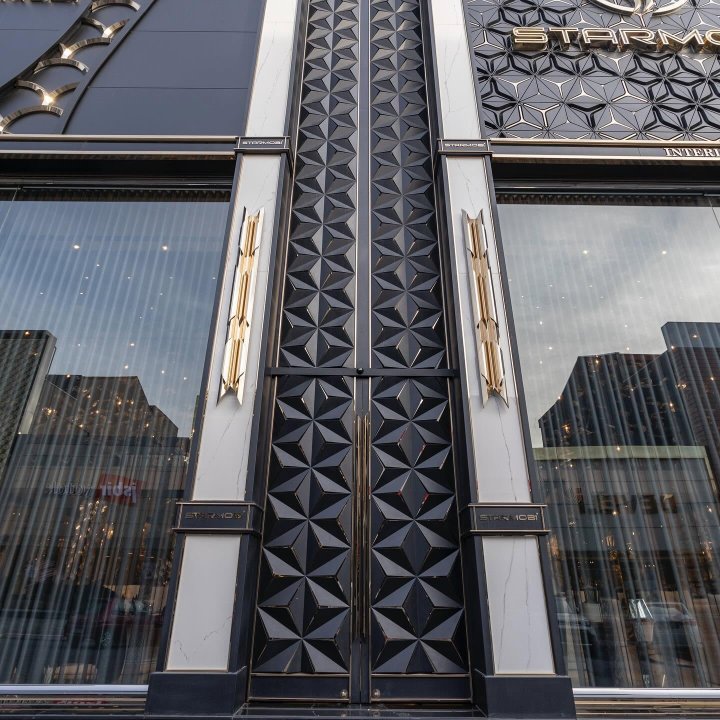
Most people searching for quality stores at Masko Furniture Complex are actually expecting a list: which one should we walk into, which one can we trust?
Most people searching for quality stores at Masko Furniture Complex are actually expecting a list: which one should we walk into, which one can we trust? But when you're choosing something you'll use for years, like a sofa set, dining room or bedroom set, knowing how to read a store is more useful than a list of names. The lighting in the window, a nice photo or a bold slogan doesn't tell you much about real quality. Quality is hidden in what the frame is made of, how the stitching is done and how the salesperson answers a difficult question.
The hard part of furniture shopping is that you can't see quality on day one. The fabric looks good for the first few months, while a frame problem only reveals itself a year later with a creak. That's why the right questions asked before buying cost far less than regret afterwards. How many years has the company been doing this? Does it make the product itself? Does it explain the materials openly? These three questions often do half the elimination.
In this article we don't go into individual store names; we look at criteria. We'll cover the company's history, its own production, material transparency, the chance to try the product in the showroom, custom sizes and interior architecture projects, completed work, certifications and after-sales communication in turn. We'll also put a manufacturer side by side with a store that only sells, and a ready-made collection side by side with custom production. Along the way we'll mention STARMOBİ as an example. The aim isn't advertising, but showing how these criteria play out in practice. By the time you finish, you'll have a concrete checklist in hand as you walk through a store's door.
Quality Stores at Masko Furniture Complex: What Should You Base Your Decision On?
History and production model
Years in the industry don't mean quality on their own, but they do show consistency. Check whether the company tells its story openly. STARMOBİ's corporate history explains that production began in 1981, the first showroom opened in 1990, and in 1998 it moved into Masko and began operating under the MEP umbrella. Three dates, three separate stages. At a company that manufactures its own products, the answer to questions about the frame and filling comes directly. At a store that only sells, the information often reaches you secondhand through an intermediary. Both can work, but with the former your questions are answered more directly. The Masko showroom is where you see the products; Modoko is the production facility.
Material transparency and the showroom experience
Ask the salesperson:
- What wood is the frame made of, and how is it joined?
- What material is used for the filling?
- What are the specifications of the fabric or leather, and how is it cleaned?
- What's underneath the visible wood surface?
If the answers are clear and relaxed, that's a good sign. Then sit down, get up, open the drawer. Photos don't show you these things. STARMOBİ's Masko showroom is at Block 19A No:12–14; you can go and take a close look at the models in its collections.
Custom sizes, projects and documents
A ready-made collection makes for a quick decision. If your home's dimensions aren't standard, you need custom production. For that, a company that offers interior architecture services or has worked with interior architects makes things easier. To see completed work, look at the project examples. Documents also give you an idea; the MEP certificate is one of them. Finally, ask who responds to calls or messages after the sale, and how quickly.
Before deciding, you can stop by STARMOBİ's Masko showroom and see the products with your own eyes. If you'd like to book an appointment in advance, just get in touch through the contact page.
Why Isn't Looking at the Shop Window Enough When Searching for a Quality Store?
When you walk past a furniture store, what draws you in is usually the lighting, the arrangement of the products and the order in the window. But what's under the sofa, or how the fabric will behave over time, can't be understood from the window. The same applies when browsing quality stores at Masko Furniture Complex: a good look is a start, but not enough to decide.
Look at the company's history and production model
A company that has stayed in the industry for a long time has tested its work over the years. There's also a difference between a company that does its own production and a store that only sells. A manufacturer directly manages materials, dimensions and craftsmanship. A store that only sells may offer a wide selection, but it will find it harder to explain production details. In STARMOBİ's story, for example, production starts in 1981, the first showroom opens in 1990, and in 1998 it moves into Masko and continues operating under the MEP umbrella. The three dates describe three separate steps, and this kind of history also makes it easier to know what to ask the store.
A store that can talk openly about materials
A good salesperson comfortably explains what the frame is made of, the type of filling, and the kind of fabric or leather. The same goes for wooden parts. If you get evasive answers, make a note of it.
- Can you get clear information about the frame, filling, fabric/leather and wood?
- Can you see the product in the showroom and try it by sitting on it?
- Is there a custom size or custom design option?
- Can they show you examples of completed projects?
- Is there someone you can reach after the sale?
Ready-made collection or custom production?
A ready-made collection suits those who want to decide quickly: you see the model, choose it and you're done. Custom production is useful if your home has unusual dimensions or you have a specific idea in mind. Places that offer both provide flexibility. STARMOBİ collections can be a good starting point for looking at ready-made models. If you're working on a project, the interior architecture service and completed projects show how the company runs its work.
Certification and beyond
Certificates aren't a reason to decide on their own, but they count as a signal; the MEP certificate is one of them. The real test begins after the sale: it's important to know who to contact when there's a problem.
If you'd like to see the products up close before deciding, you can visit STARMOBİ's showroom at Masko (Block 19A No:12–14). To meet in advance, just book an appointment through the contact page.
Why Do a Company's History and Time in the Industry Matter?
Furniture is a long-term investment. That's why one of the first things to look at when browsing Masko Furniture Complex is how long the company in front of you has been doing this. Years alone don't tell you everything, but they give an important clue.
What Does Experience Show?
A company that has stayed in business for a long time has at least learned to solve the problems it runs into with customers. Through experience, they know which frames break down over time and which fabrics wear under heavy use. This know-how doesn't build up in a business that drifts in and out of short-term work. Then there's after-sales: a company that has stood at the same address for years is one you can find when you call.
Of course, looking only at the number of years isn't enough. You also need to ask how the company spent that time: did it come from manufacturing, or did it only deal in sales? When a problem arises, the answer you get from a company that does its own production and from a store that only sells products will be different.
Reading the History Correctly
When examining a company's history, it's important not to mix up the dates. Let's take STARMOBİ's story as an example: its production journey begins in 1981, the first showroom opens in 1990, and in 1998 it moves into Masko and begins operating under the MEP umbrella. Three separate steps, each with its own meaning. Production, the point of sale and the location at Masko are different stages. A company that can explain this distinction clearly is one that owns its history.
One more thing: the Masko showroom and the production facility are not the same thing. STARMOBİ's showroom at Masko is at Block 19A No:12–14, while production takes place at the Modoko facility. If a company explains these two separately, you can say it's being transparent.
Documents and References
History shouldn't remain just words; it should be backed up somewhere. You can look at sources such as the company's MEP certificate page, and also review its completed projects. When years, documents and real work come together, the picture becomes more trustworthy.
Before making a decision, I recommend going to the showroom and asking your questions face to face. You can visit STARMOBİ's Masko showroom or book an appointment through the contact page.
How to Look at a Company's History When Searching for a Quality Store at Masko Furniture Complex
When deciding whether to trust a store, the first place to look should be its history. Furniture is an investment you buy once and use for years. So when searching for a quality store at Masko Furniture Complex, asking "how long has this company been in the business?" is entirely reasonable.
What does time in the industry tell you?
A company that has kept going for many years has somehow overcome customer complaints, material problems and delivery hiccups. Still, the number of years isn't enough on its own. You need to see whether that history has something concrete behind it: completed work, a story that can be told, a showroom you can visit. It's also a good sign if the company's about page states these dates clearly and consistently.
You can look at STARMOBİ as an example. Its production journey begins in 1981. The first showroom opens in 1990. It moves into Masko in 1998, and since then it has been operating under the MEP umbrella. These three dates are separate events: one is the story of production, one of the point of sale, and one of its place at Masko. If a company makes this distinction clearly when telling its history, you'll usually see the same transparency in other areas too.
A manufacturer versus a store that only sells
A company with its own production can give direct information about the frame, filling, fabric or leather. A store that only sells brings in the product from elsewhere; some of your questions get passed on to the manufacturer. This doesn't mean a sales-only store is bad, just that the chain of answers is longer. If you want a custom size or custom design, a company connected to production makes things easier. If you're looking for a ready-made collection (the collections are a good example of this), you can see the options side by side and decide quickly.
Verify the history with documents and projects
- Look at examples of completed projects; STARMOBİ's projects section is one example.
- Ask whether they have experience working with interior architects.
- Find out the names of their certificates, such as the MEP certificate.
- Clarify from the start who you'll contact after the sale, and how.
Seeing the materials and craftsmanship with your own hands is also essential. To do that, you can stop by STARMOBİ's Masko showroom at Block 19A No:12–14, sit on the sofas and touch the fabrics. Production takes place at the Modoko facility; it's worth not confusing the showroom with the production facility. To book an appointment, just write through the contact page.
A Manufacturer or a Store That Only Sells?
When looking at furniture, most people first focus on the model, color and price. Yet behind two places selling you the same sofa there can be two very different setups. One makes the product in its own workshop; the other buys it elsewhere and resells it. Knowing this distinction makes things much easier when browsing quality stores at Masko Furniture Complex.
What sets a manufacturer apart
A company that keeps production in its own hands knows, and can explain, what wood the frame is made of, how the filling is prepared and why the fabric was chosen. When a problem arises, it's clear who to go to. With requests such as changing dimensions or reupholstering in a different fabric, things move faster because the decision-maker is inside the workshop.
It's also worth looking at time. How long a company has been in production is one of the most concrete indicators of experience. STARMOBİ's history, for example, includes production starting in 1981, its first showroom opening in 1990 and its move into Masko in 1998; these three dates describe separate stages. You can read the company's story on the about us page. The production side is the Modoko facility, while Masko is the showroom where you can see the products in person.
What does a sales-only store offer?
Sales-focused stores have advantages too: they can offer a wide selection from different manufacturers and may deliver ready-made products quickly. But when you ask about material details, the answer depends on the manufacturer. If you want a custom size or a design change, the number of steps in between can lengthen the process.
Ready-made collection or custom production?
A ready-made collection lets you see what you like and decide straight away. Custom production is shaped around the size of your living room or a plan drawn by an interior architect. A company that can do both is usually more flexible. You can find ready-made models in STARMOBİ collections, and if you have a special need, you can proceed through the interior architecture service.
In short, before entering a store, ask: "Who makes this?" If the answer is clear and relaxed, you're on the right track. If you'd like to see for yourself, you can stop by STARMOBİ's Masko showroom at Block 19A No:12–14, or book an appointment through the contact page.
The Showroom and the Production Facility Are Not the Same Place
When looking at furniture, many people think "where I see it is where it's made." In reality, a showroom and a production facility are two spaces that do different jobs in different places. The showroom is where you see the product, sit on it and try it; in the production facility, the frame is built, the filling is prepared, and the fabric or leather is cut and sewn. It's the same at Masko: the Masko showroom is the sales and experience space, while Modoko is the production facility.
A manufacturer or a store that only sells?
Knowing this distinction makes things easier. A store that only sells brings together ready-made products from different manufacturers. There are plenty of options, but when you ask about material details, the answer sometimes can't come from the store and has to be asked of the manufacturer. A company with its own production, on the other hand, can explain the process from frame to fabric and can handle custom-size requests in-house. STARMOBİ is one of the options you can look at as an example of this second group. The company's history is useful here too: production began in 1981, the first showroom opened in 1990, and the move into Masko came in 1998. The three dates describe three separate steps; they don't replace one another.
Ready-made collection or custom production?
With a ready-made collection, you see the product as it is, sit on it and touch its fabric. Delivery is also generally faster. With custom production, you determine the dimensions, color and even the details of the model according to your home; in return, it takes a bit more planning. A place that offers both usually provides the easiest choice. In STARMOBİ collections you can browse ready-made models and discuss changing the dimensions of a design you like.
What to look for in the showroom
- Really try how comfortable the product is to sit on; don't just look and move on.
- Ask questions about the frame, filling and fabric or leather; notice whether you get clear answers.
- Ask for examples of completed work. The projects page is a good starting point for this.
- If you're working with an interior architect, find out whether the company has experience with such projects; the interior architecture service makes this easier.
- Don't skip certifications and after-sales communication either. The Masko showroom is MEP-certified; you can find out more on the MEP certificate page.
In short, the showroom is the shop window; real trust comes from material transparency and the history behind the production. STARMOBİ's Masko showroom is at Block 19A No:12–14. If you'd like to see the products up close, you can stop by or book an appointment through the contact page.
Transparency in Materials and Craftsmanship: A Quality Store Answers Questions
When walking around Masko Furniture Complex, most stores look similar in the window. The difference lies in what's underneath the product. A quality store doesn't hide its materials, and gives clear answers when you ask.
What to Ask?
- What material is the frame made of: wood, or something else?
- What is the filling, and will it leave sitting marks over time?
- What type of fabric or leather is it, and how is it cleaned?
- How have the joints, connections and seams been handled?
If the answers to these questions come fluently, that's a good sign. Evasive answers, or a line like "they're all the same anyway," should give you pause.
A Manufacturer, or Just a Seller?
A company with its own production knows its materials and craftsmanship closely and can handle size changes in its own workshop. A store that only sells may offer a wide selection, but is often only as familiar with production details as the information it gets from the manufacturer. Neither is wrong; you just need to set your expectations accordingly. A ready-made collection is suited to choosing quickly and by sight, while custom production calls for solutions that fit your living room perfectly.
STARMOBİ as an Example
If you'd like to see how these criteria play out, STARMOBİ is one of the standout options. Its production history goes back to 1981, its first showroom opened in 1990, and in 1998 it moved into Masko and began operating under the MEP certificate umbrella. The Masko showroom lets you see the products and try them by sitting on them; the production side takes place at the Modoko facility. You can read about the company's journey on the about us page.
The collections are a good starting point for looking at ready-made models. If you're considering custom sizes, take a look at the interior architecture service. You can see the real-world results of work done with interior architects in the completed projects. As interior architects in the industry often say, completed work tells you more than a brochure.
Before deciding, you can stop by STARMOBİ's showroom at Masko, at Block 19A No:12–14. If you'd like to talk in advance, just book an appointment through the contact page.
Frame and Filling: The Hidden Side of a Sofa
When you look at a sofa, the first things you see are the fabric, the stitching and the leg design. Yet the part that determines the sofa's lifespan stays under the fabric. One of the easiest ways to tell a quality store apart is to see how comfortably it talks about that hidden part.
Why does the frame matter so much?
The frame is the sofa's load-bearing structure. Which wood is used, how the joints are made and whether it has gone through processes such as drying all show over time. A weak frame starts to creak and flex after a few years, and the seating loses its shape. Don't hesitate to ask the sales consultant, "What is the frame made of?" If the answer is clear and fluent, that's a good sign. If they brush it off, make a note of it.
Filling: it's what gives the seating feel
The filling material affects the sofa's firmness, its ability to recover and its tendency to sag over the years. Sitting in the showroom for a few minutes tells you more than looking at a catalogue a hundred times. Pay attention to whether the cushion returns to its original shape when you get up and whether your back finds support.
This is where a difference can emerge between companies that do their own production and stores that only sell. A manufacturer knows the process from frame to filling and can answer detailed questions more easily. Sales-focused stores often make do with the information they get from the manufacturer. That doesn't necessarily mean bad, it just means you need to shape your questions accordingly.
STARMOBİ, for example, offers the chance to try products in person at its Masko showroom. The showroom is at Block 19A No:12–14. The company's production history goes back to 1981. On the production side, there's the Modoko facility. When browsing STARMOBİ collections, asking the same questions will serve you well: what frame, filling and fabric options does it come with?
Conclusion
Understanding what makes a quality furniture store is really the sum of a series of small questions. The company's history and time in the industry, whether it has its own production, whether the frame and filling are openly explained, whether you can try the product in the showroom, and custom size and design options are chief among them. There's no right or wrong between a ready-made collection and custom production. What matters is knowing which one suits your needs, and the store being able to answer that honestly.
History also gives a clue. There are three separate dates in STARMOBİ's story: production began in 1981, the first showroom opened in 1990, and the move into Masko came in 1998. Today the company operates under the MEP certificate umbrella. You can read these dates as a sign of trust, but don't make them the sole reason for your decision.
Completed work also says a lot. Looking through project examples shows how the company works in different spaces. If you're planning a major renovation, support such as an interior architecture service can make the process easier. Don't forget after-sales communication either. Find out from the start who you'll contact if a problem arises after delivery.
Keep these criteria with you as you browse Masko Furniture Complex. Make a list and ask the stores one by one, and see how the answers come back. If you'd like to get to know the company better, the about us page is a good place to start. But the clearest decision comes when you see and try the product. You can visit STARMOBİ's Masko showroom or book an appointment through the contact page.
Güncellendi: Ekim 2026