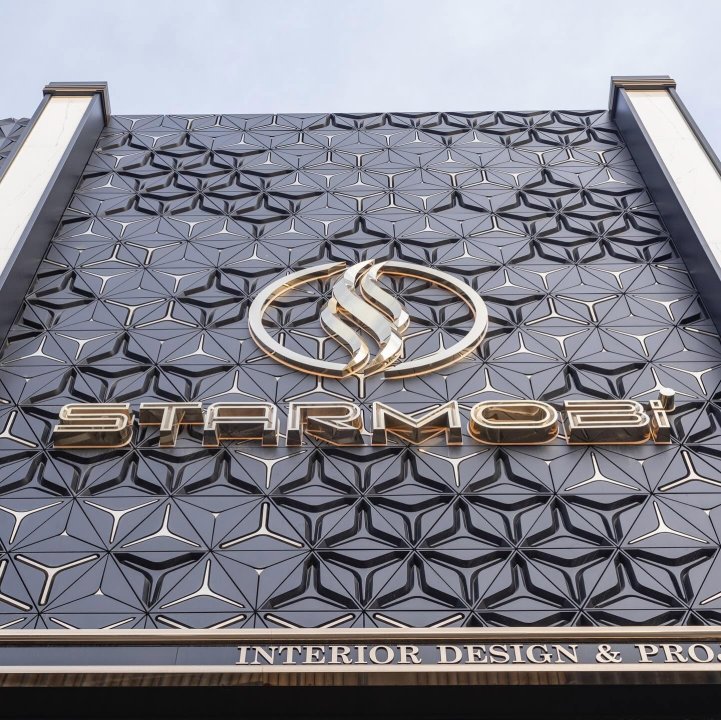
When it comes to luxury furniture in Türkiye, the name Starmobi Mobilya continues to find its way onto the lists of an increasing number of interior designers and discerning buyers.
When it comes to luxury furniture in Turkey, the name Starmobi furniture keeps finding its way onto the shortlists of more and more interior architects and discerning buyers. In an era when home decoration demands quality and design together, understanding what a brand truly offers is critical to building a solid foundation before showroom visits. Every brand has its own story, production philosophy, and target audience; choices made without regard for these differences often lead to results that fall short of expectations.
This guide aims to cover STARMOBİ from every angle: its founding story from the start of production in 1981 to today, its Italian-inspired design language, its custom size and design capabilities, its project-based collaboration model with interior architects, and how the showroom experience in Masko differs from the Modoko production facility. In this comprehensive analysis you will also find the right selection criteria for luxury furniture, frequently asked questions, and concrete suggestions for exploring the collections.
The information in this article is designed to speak both to end users who want to manage their budget wisely and to interior architects who need a reference point when looking for a manufacturer suited to their project. We rely on an editorial evaluation perspective rather than advertising language, because a good furniture choice is not merely an aesthetic preference; it is a long-term investment decision.
Who Is STARMOBİ? The Brand's Founding Philosophy and Value Framework
STARMOBİ is one of Turkey's long-established furniture brands, which began production in the Modoko district in 1981. Since its founding, its core focus has been to keep quality raw materials, original design, and long-lasting production processes together. The brand's founding philosophy is built neither on simply selling products nor on repeating standard mass production; instead, its primary goal has been to bring each customer's living space together with its own identity.
The first showroom, opened in 1990, was a turning point in the brand's direct relationship with consumers. This step made it tangible that a product is not just an object leaving a factory, but also an experience and an aesthetic proposal. While many brands come and go in the furniture industry over the years, STARMOBİ's sense of continuity stems from a consistent value framework being backed by production quality.
The prominent elements in the brand's value framework can be listed as follows:
- Synthesizing an Italian-inspired design aesthetic with Turkey's production tradition
- Offering custom-size and project-based solutions beyond a standard product catalog
- Keeping alive a long-standing collaboration model with interior architects
- Positioning the Masko showroom not merely as a point of sale, but as a ground for design dialogue
This framework defines STARMOBİ less as a product supplier and more as a trusted partner in luxury living space design.
The Core Principles of the Brand's Approach
When evaluating a furniture brand, looking only at product images can be misleading. What is truly decisive is the brand's production philosophy and the way it builds relationships with customers. Looking at STARMOBİ's brand story, a company that started production in 1981 and opened its first showroom in 1990 after nearly a decade of experience is clearly not content with merely selling products; it is trying to build a long-term design approach.
At the center of the brand's approach lies the principle that luxury furniture is made possible not by mass production but by careful selection. From an interior architect's perspective, this approach matters: to preserve the integrity of a project, a furniture supplier's technical capacity and aesthetic consistency must both be reliable. For the buyer, too, the following distinction is decisive: a standard catalog offering, or project-focused customization capability?
STARMOBİ positions these two options not as alternatives to each other, but as complementary layers. While the collections offer a defined aesthetic framework, custom size and material options provide flexibility that can be adapted to individual projects. This balance, regarded as one of the notable options in the industry, enables the brand to appeal both to individual buyers and to end users working with interior architects.
Ultimately, all of the brand's touchpoints, including the MEP-certified Masko showroom experience, can be read as a reflection of a consistent commitment to quality.
Its Place in the Turkish Furniture Market
Over the past decade, the Turkish furniture industry has undergone a significant transformation in both production capacity and design maturity. Within this transformation, the difference between long-established brands that preserve their accumulated expertise and players who only invest in trends is becoming increasingly clear. By starting production in 1981, STARMOBİ is one of the notable options among brands that have maintained a long-standing presence in this industry.
Evaluated from an interior architect's perspective, two basic factors determine a brand's position in the market: consistency and adaptability. Brands that combine the use of European-sourced materials with domestic production discipline are being chosen more often, especially in corporate and luxury residential projects. From this angle, STARMOBİ offers a model that combines an Italian-inspired design language with the assurance of domestic production.
The expectations of furniture buyers in Turkey have also changed. Custom sizing, project-based service, and the showroom experience are gaining importance over standard off-the-shelf products. For brands that meet this demand, the Masko MEP certificate serves as an indicator of reliability in the eyes of consumers; STARMOBİ, which has served at this standard since 1998, gives a consistent answer to this expectation.
For buyers and interior architects looking to position themselves in a competitive market, the evaluation criteria can be listed as follows:
- Production history and continuity: Decades of experience directly affect material knowledge and craftsmanship standards.
- Customization capacity: Brands that can offer design flexibility beyond the standard catalog gain a decisive advantage in project-based work.
- Showroom infrastructure: Being able to experience the product in person is critical, especially for high-budget decisions.
Within these criteria, we recommend exploring the STARMOBİ collections and visiting the showroom in Masko to examine the collections in person and evaluate the options suitable for your project.
From 1981 to Today: Production History and the Showroom Journey
STARMOBİ entered the furniture industry in 1981 with its production facility. This was a period when Turkey's furniture industry was still maturing and quality standards were largely defined by imported products. The brand's investment in production infrastructure during this period, laying its foundations, foreshadows the corporate identity of the years that followed.
With the opening of its first showroom in 1990, the brand moved beyond a purely manufacturer identity to become a brand that meets consumers directly. This transformation is a critical distinction in the luxury furniture market: production capacity alone is not enough; how a product is presented and how it is experienced also play a decisive role in the purchase decision.
Since 1998, STARMOBİ has operated an MEP (Masko Exclusive Project) certified showroom in Masko, one of Istanbul's leading furniture destinations. This distinction is important: the space in Masko is not just a point of sale; it is a corporate exhibition space where collections are experienced in a living atmosphere and where interior architects take reference during their project processes. Production, on the other hand, continues at the Modoko facility, which stands out as Istanbul's furniture production center. The two locations should not be confused: Modoko is production, Masko is the showroom.
This journey of more than forty years shows that the brand has grown while preserving both its industrial discipline and its aesthetic consistency. For those who want to learn more about STARMOBİ, this historical process offers a key reference point that makes sense of the brand's current design philosophy and its approach to the customer experience.
For those who want to see the collections in person and witness the brand's design language firsthand, visiting the Masko showroom is the best starting point. You can plan your visit more efficiently by exploring the STARMOBİ collections beforehand.
From Production to Showroom: The Importance of Every Stage
To truly understand a furniture brand, looking only at what you see in the showroom is not enough. A complete picture emerges only when the roots of the production process, how design decisions are made, and the quality of the after-sales experience come together. STARMOBİ's brand story begins with its production facility in 1981; the manufacturing experience accumulated since then forms the foundation of the brand's technical infrastructure.
The first showroom, opened in 1990, added a customer experience dimension to this production-focused structure. For buyers who want to see how designs look in real spaces, this step was a critical turning point. Today, the brand continues its presence with an MEP (Masko Exclusive Project) certified showroom in Masko, Istanbul's prestigious furniture center, since 1998.
At this point, an important distinction needs to be made clear: the space in Masko is a sales and experience venue; the facility in Modoko is the factory where production takes place. Telling the two locations apart is important for reading the brand's operational structure correctly.
Professionals working in interior architecture are aware of this distinction. According to an interior architect, the biggest advantage of working with a brand that has its own production infrastructure is getting realistic answers to custom size and design requests; the showroom serves as an exhibition space that makes these possibilities tangible.
Exploring the STARMOBİ collections in person and visiting the Masko showroom is the most direct way to closely evaluate the design philosophy and material quality.
What Does Decades of Accumulated Experience Mean for the Buyer?
One of the toughest questions in furniture buying is this: how experienced is this brand really, and does that experience translate into a concrete advantage for me? Looking at STARMOBİ's founding story, a company that started production in 1981 has built up serious expertise over more than forty years. This is not marketing rhetoric; it points to a tested stock of practical knowledge in product development, material selection, and customer relations.
Interior architects evaluating brands with a long production history generally use this yardstick: has the company been able to update its design approach over the years, or has it been left in the past? At this point, the first showroom opened in 1990 stands out as a decision that started direct contact with the customer early on. Having a sales space creates an opportunity to reflect the dialogue between brand and buyer into product design.
Represented by an MEP (Masko Exclusive Project) certified showroom in Masko since 1998, the brand maintains its position in the industry strongly through its long presence on this platform. The practical meaning for the buyer is this: working with an experienced brand means finding more mature solution mechanisms for unforeseen problems; however, the healthiest way to assess whether this advantage really works is to evaluate it in person during a showroom visit.
Italian-Inspired Design Language: Aesthetic Choices and Material Philosophy
Although the phrase "Italian-inspired" has at times become an ordinary marketing cliché in the furniture industry, among brands that place this approach at the center of their design decisions, STARMOBİ is one of the notable options, with a consistent aesthetic line stretching from material selection to form.
The Italian Reference in Fabric and Leather Choices
The fundamental distinction of the Italian furniture tradition lies in its ability to construct form and functionality without one excluding the other. STARMOBİ makes this approach tangible through its sourcing of Italian fabric and leather; in upholstery materials, tactile quality, color depth, and long-term durability are sought together. From an interior architect's perspective, this choice is not merely aesthetic but functional: the right upholstery material directly affects the furniture's lifespan and harmony with the space.
A Comparative Evaluation: Pros and Points to Consider
The advantages of an Italian-inspired design language include timeless silhouettes, neutral-warm color palettes, and a high standard of craftsmanship. That said, this segment requires more planning from the buyer in terms of customization processes and delivery times. When the STARMOBİ collections are examined, it can be seen that color and finish options are kept broad and that material alternatives suited to Turkey's varied climate conditions are offered; this is an important practical advantage for the local buyer.
In conclusion, for buyers and interior architects looking for an approach that combines aesthetic consistency with material quality, examining STARMOBİ's brand philosophy and collections in person will be the most productive step in the decision process. A visit to the Masko showroom offers the chance to experience the materials directly.
Italian Fabric and Leather: Why Does the Source Matter?
In luxury furniture, the quality of the upholstery material is as decisive as structural durability. Where the fabric or leather comes from, how it is processed, and which production standards it is subject to directly affect both the furniture's appearance and the long-term user experience.
Fabrics from Italian suppliers are generally produced with stricter quality control processes. They can be considered one of the notable options in terms of colorfastness, surface resistance, and tactile consistency. That said, some Turkish and European alternatives can also deliver competitive performance. The key difference mostly shows up in the price-quality balance and in long-term aesthetic durability.
Italian Leather: Advantages and Points to Consider
- Pros: Natural breathability, a texture that matures over the years, high abrasion resistance
- Cons: High cost, risk of being affected by direct sunlight, need for special care
Evaluated from an interior architect's perspective, the source of materials is increasingly being questioned in project-based furniture selections. Especially in residential and hotel projects intended for long-term use, transparency in the supply chain is becoming a critical selection criterion.
By putting Italian fabric and leather options at the forefront of its collections, STARMOBİ aims to reflect its meticulousness in this area to the user in a tangible way. Positioning the origin of materials not as a marketing element but as an inseparable part of its production philosophy creates a strong reason for choice, especially for informed buyers.
Conclusion
Choosing furniture is not merely an aesthetic decision; it is a strategic process that determines a space's functionality, comfort, and long-term value. Considering the topics covered in this guide, STARMOBİ's key strengths can be summarized as follows: its production experience continuing since 1981, its first showroom step taken in 1990, and its MEP-certified showroom presence maintained in Masko since 1998 reflect both the brand's technical maturity and its institutional continuity.
The care taken in the use of Italian fabric and leather, custom size options, and the project-based collaboration model with interior architects are among the elements that set STARMOBİ apart from standard furniture sellers. On the other hand, every buyer's needs, budget, and spatial conditions are different; therefore, rather than choosing any brand or product group with blind trust, experiencing the options in person is always the healthiest approach.
For those who want to get to know the collections and the interior architecture service more closely, a visit to the showroom in Masko offers the chance to experience the products physically and to talk one-on-one with the expert team. As a next step, we recommend exploring STARMOBİ's collections online, then visiting the Masko showroom to see for yourself how the space and materials make you feel.
Güncellendi: Ekim 2026